The Catalonia Convention Center sits on the city's waterfront with the kind of architectural self-assurance that only a building facing the Mediterranean can afford — glass, steel, and an abundance of natural light that makes everything inside it look better than it probably deserves. It was here, on the afternoon of 28 February, a full three days before MWC's show floor at Fira Gran Via opens its doors to the masses, that Xiaomi chose to make its statement. A pre-MWC launch outside the show floor itself — an event that technically precedes the world's largest mobile gathering while drawing every journalist in Barcelona to a waterfront room with floor-to-ceiling windows and, on the table before them, three of the most interesting phones of the year. Standing with a Leitzphone in one hand and a glass of something Catalan in the other, the impression was immediate: Xiaomi arrived in Barcelona with something rarer than new phones. It arrived with an argument.
I have been using the Chinese version of the Xiaomi 17 Ultra in Delhi for the better part of two weeks — daily carry, real streets, the occasional bout of aggressive photography in conditions that no press event backdrop would dare recreate. Today in Barcelona, I got my first extended time with the global edition, the Xiaomi 17, and the Leica Leitzphone powered by Xiaomi. Consider this dispatches from both fronts: the lived-in, Delhi-dust-covered version and the freshly unveiled, Barcelona-polished one.
The early impression, formed across both encounters, is this: Xiaomi has produced its most coherent premium lineup yet — and it has done so at precisely the moment the market has run out of patience for anything less. According to IDC data released this very week, global smartphone shipments face a 12.9 per cent contraction in 2026, the steepest in the industry's history, driven by an AI-induced memory chip crisis that IDC's Nabila Popal describes as making the sub-$100 phone "permanently uneconomical." In India, smartphones above Rs 30,000 already account for a record 23 per cent of total shipments. The cheap phone is structurally untenable — a condition that goes far deeper than fashion. Xiaomi, having spent fifteen years perfecting the affordable Android, has chosen this exact moment to stop.
The Room, the Phones, and the Red Dot
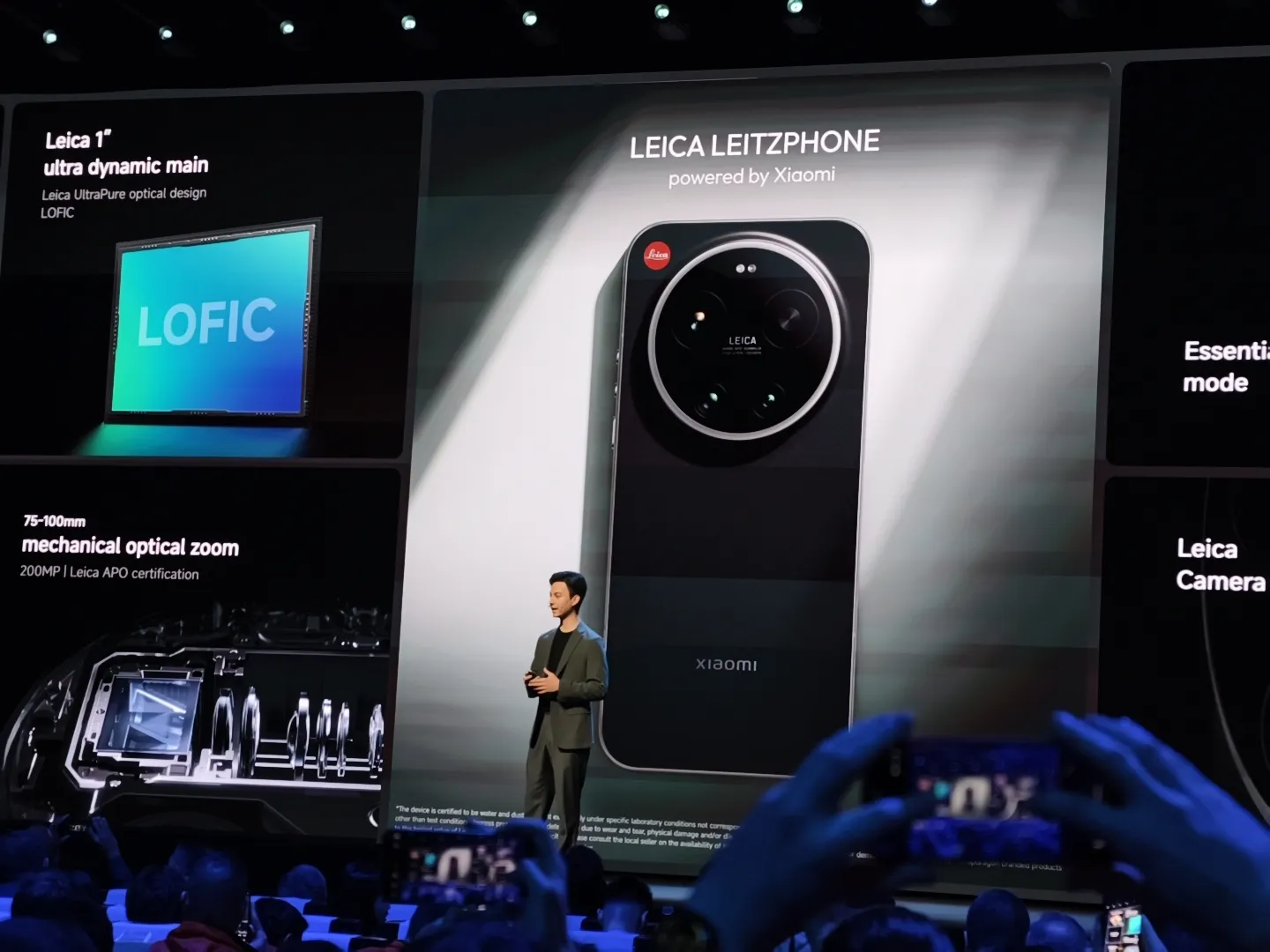
Xiaomi's Barcelona press suite is everything a technology press event aspires to be and rarely achieves: intimate yet spacious, lit with the kind of warm precision that makes every surface look like it was designed by someone who has read all of Dieter Rams and understood most of him. The phones sit on pedestals under directional spots. A Leitzphone in black catches the light in a way that makes you reach for it before you have consciously decided to.
The Xiaomi 17 Ultra is, in person, a better-looking phone than its press renders suggest — a rarity among Chinese flagships, whose marketing imagery tends toward the aspirational and whose physical reality tends toward the fingerprint-collecting. The design shares structural DNA with the Vivo X300 Pro — flat screen, rounded corners, flat rails, a large circular camera island — but carries itself with considerably more restraint. In black, it reads as considered and minimal.
The Starlit Green colourway, which photographs as ostentatious, is in person closer to a distinguished British racing green that would look entirely comfortable in the company of a Jaguar E-Type. The volume rockers are circular, invoking the iPhone 4's machined physical grammar in a way that feels like homage rather than imitation. On the rear, the horizontal Leica branding in red is the only extravagance — and even that whispers where every instinct of a Chinese flagship traditionally shouts.
After two weeks in Delhi with the Chinese unit, I can confirm that this restraint holds up. The phone stays clean after a day's handling — a minor miracle for a glass-backed device. It sits securely in one hand at 218.4 grams — another. And it carries its €1,499 price tag with the quiet confidence of an object that has simply earned it.
The Starlit Green colourway photographs as ostentatious. In person, it is closer to British racing green — comfortable in the company of a Jaguar E-Type.
The Camera: Hardware That Earns Its Specification Sheet
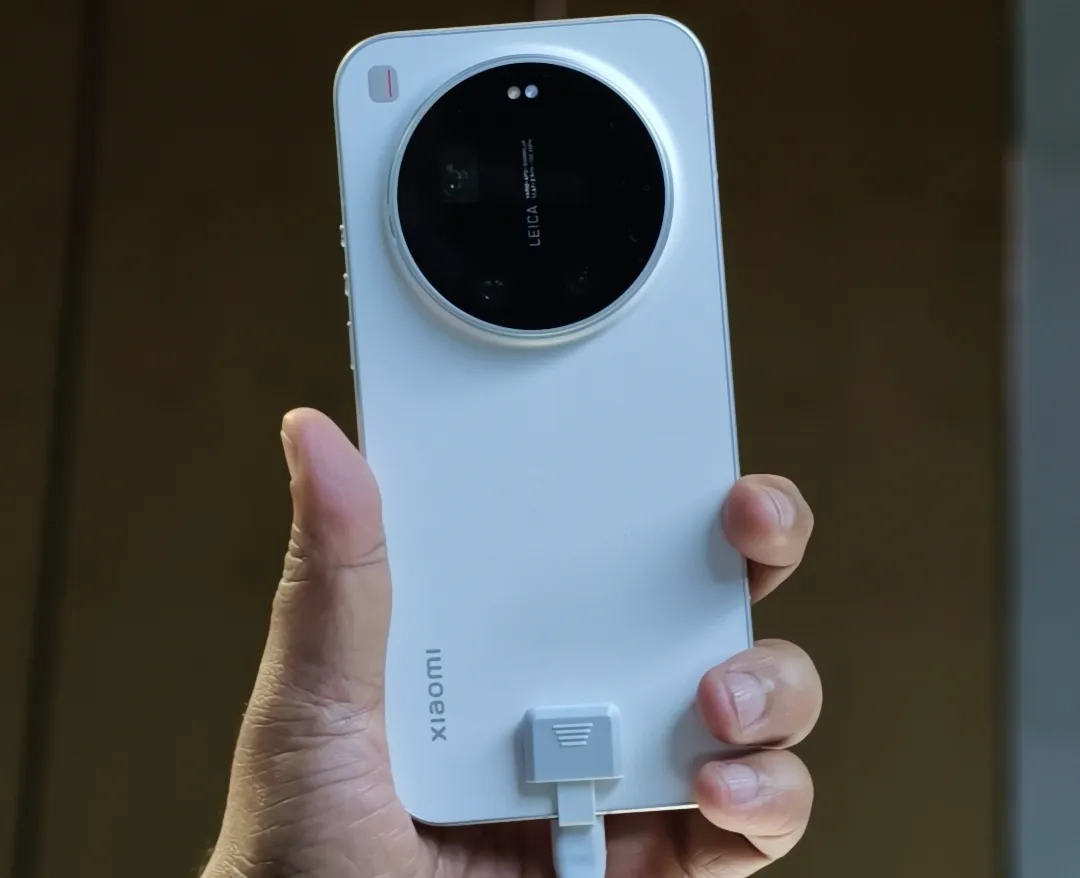
In Delhi, I was shooting with the Chinese 17 Ultra across two weeks of sustained use — street photography in Hauz Khas, interiors in South Delhi homes with the kind of mixed lighting that separates serious imaging from enthusiastic point-and-shooting, the occasional portraiture that tests a telephoto's resolving power at the limits of the focal range. The imaging output was, consistently, impressive in ways that suggest the hardware is doing genuine work rather than leaning on software to paper over optical limitations.
The main sensor is a 1-inch Omnivision Light Fusion 1050L, built on LOFIC architecture — a capacitor-based design that significantly increases full-well capacity and produces HDR performance that challenges sensors considerably larger and more expensive. Critically, this sensor remains exclusive to Xiaomi — a part that Vivo, OPPO, Apple, and Samsung have all passed over. In the arms race of mobile imaging, sensor exclusivity at the 1-inch tier is a meaningful advantage: dynamic range, low-light latitude, and colour depth are properties that algorithms can enhance but only source material can originate. In two weeks of shooting, the 17 Ultra produced images with a textural richness and tonal precision that is immediately recognisable as the Leica-collaboration aesthetic — earned at the sensor level rather than manufactured in post.
The telephoto is the specification that stops conversations: a 200-megapixel Samsung HPE sensor spanning 75 to 100mm equivalent focal length with variable aperture — a mechanically zooming computational system achieving the equivalent of a 400mm reach. On a hardware-native level, this is more zoom capability than almost anything else in the Android ecosystem.
Here in Barcelona, the demo units gave me a first look at the global tuning of this system, and the early impression is that the optical quality at the long end of the range holds up in a way that previous multi-focal-length systems have historically struggled to achieve. Whether Vivo's formidable computational algorithms can overcome a native hardware disadvantage in real-world shooting is a question the full review — with controlled testing and enough time — will answer properly. The first impression is that Xiaomi has set a high enough hardware bar that closing it will require something extraordinary.
HyperOS 3: A Reformed Character
MIUI, in its prime, was the software equivalent of a Mumbai local at rush hour: extraordinarily capable of getting you where you needed to go, but requiring a tolerance for chaos, noise, and the occasional elbow in the ribs that tests most people's patience. HyperOS 3 — experienced across two weeks on the Chinese 17 Ultra in Delhi and confirmed today on the global units — is a fundamentally different proposition. The animations are silky in the manner of software that has been tested by people who actually use phones rather than people who demo them. The AI features — Circle to Search, AI Writing, the Gemini Pro integration bundled for three months — feel purposeful rather than speculative. The bloatware that once populated Xiaomi's app drawer like uninvited wedding guests has been cleared with an efficiency that suggests someone in Xiaomi's software team finally reached the end of their tether.
The display that HyperOS 3 runs on deserves equal billing. The M10 OLED panel on both the Ultra and the Leitzphone abandons the traditional pentile subpixel matrix in favour of a layout that delivers better sharpness and improved power efficiency simultaneously — which is the panel equivalent of a car that handles better and uses less fuel, a combination manufacturers routinely promise and rarely deliver. At 3,500 nits of peak brightness, the screen performs in Barcelona's February sun with the kind of headroom that makes you wonder why you ever accepted anything dimmer. Paired with the dual-channel ice cooling system and the 6,000mAh Surge Battery, the Ultra's thermal and power management in two weeks of Delhi use was quietly excellent — cool under sustained camera use, and unhurried about finding a charger before lunch.
The Leitzphone: Leica's Century, Condensed to 8.32mm
Leica turned 100 this year. To mark the occasion, the German optics company did what any sensible centenary brand does: partnered with a Chinese technology firm to put a rotating physical dial on a smartphone. The result is either the most audacious product collaboration in consumer electronics or a masterclass in brand extension, depending on your disposition. Having spent time with the Leitzphone in Barcelona today, I am inclined toward the latter.
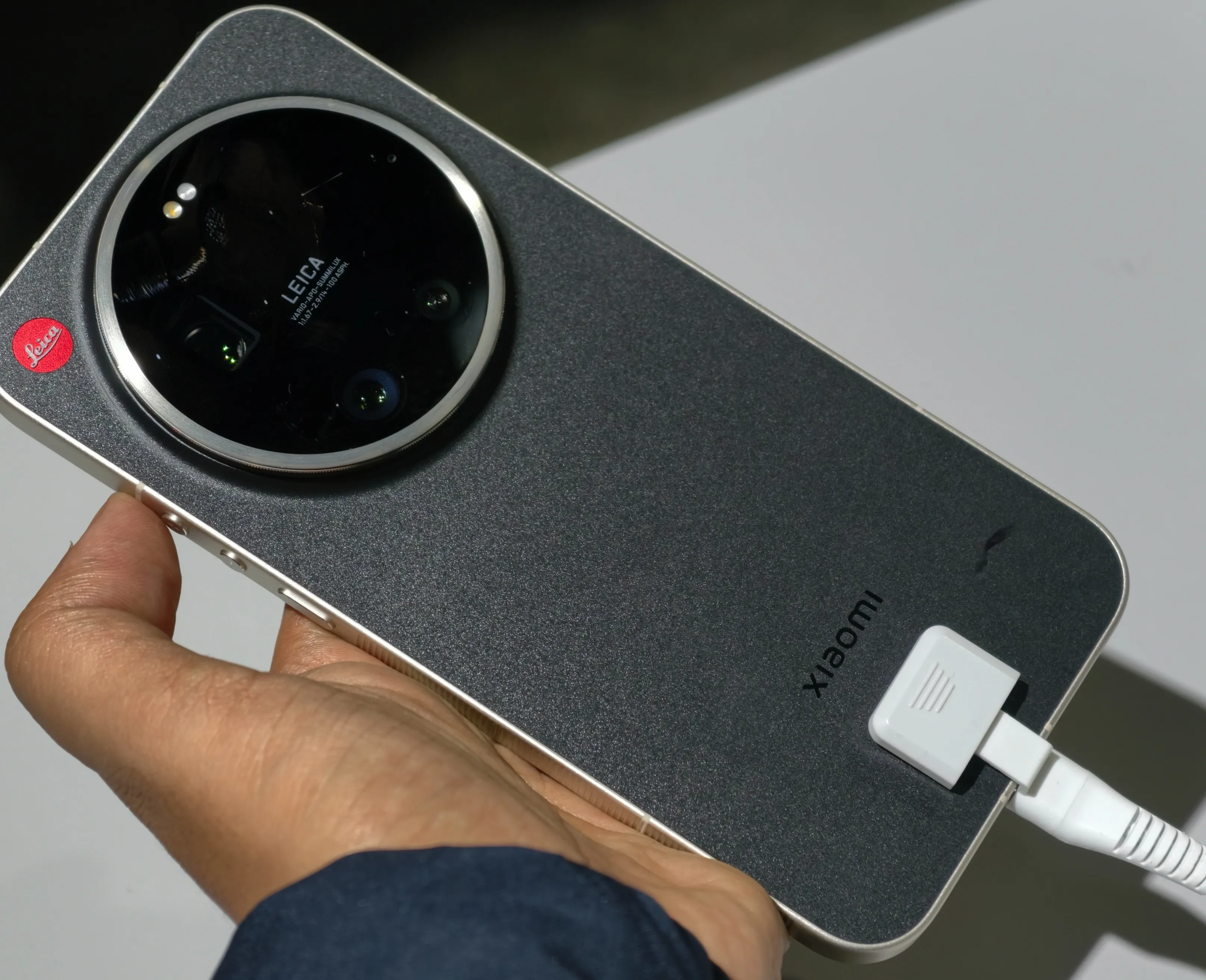
The hardware foundation is identical to the 17 Ultra — same Snapdragon 8 Elite Gen 5, same 200-megapixel variable telephoto, same M10 HyperRGB display, same 6,000mAh battery. What the Leitzphone adds is a design and software skin so thoroughly reconceived through Leica's aesthetic philosophy that the two phones, sharing every specification, feel categorically different to inhabit. The exterior is an explicit homage to the M-series rangefinder: smooth black rear, silver rails with a gilded pattern, Leica branding machined into the rails themselves. It is an avant-garde object rather than a consumer product. In a room full of smartphones, it is the one that makes other smartphones feel slightly embarrassed about themselves.
The Leica Camera Ring is the feature that makes the Leitzphone genuinely distinct rather than merely aesthetically differentiated. It is a physical rotating dial built into the rear camera island — precisely machined, delivering haptic feedback as it turns, mappable from settings to zoom control or aperture adjustment or whatever else Xiaomi decides to support in future updates.
Rotating it today in Barcelona produced a sensation that Apple's Camera Control button, for all its engineering, falls short of: actual mechanical movement rather than a haptic simulation of it. The difference is what separates a real gear lever from a paddle shift — both change gears, but only one makes you feel like you are driving. This is, in my first impression, a more satisfying and more intuitive physical camera control than anything currently shipping on a flagship smartphone.
The Leica Essential mode in the camera app hardens that impression. It is a software layer that hardcodes the colour science, tonal rendering, and photographic character of specific iconic Leica cameras — the M9, the M3 loaded with MONOPAN 50 film — into the image output. The results, in a brief window of handling at the Catalonia Convention Center today, were genuinely evocative of those cameras' particular quality of light. For anyone who has recently priced a used Leica M9 on eBay and required a moment to compose themselves, the Leitzphone at €1,999 begins to seem, if imprecise in its economics, then at least directionally justified.
The India calculus is straightforward and slightly deflating: the Leitzphone almost certainly stays out of India. At approximately Rs 1,80,000 at current exchange rates, it competes with a MacBook Pro rather than a smartphone. The 17 Ultra and the 17, however, are coming — and Xiaomi's historical practice of pricing its Indian flagships below the direct euro-to-rupee conversion offers reason for optimism, though memory price inflation has narrowed that cushion considerably.
Rotating the Leica Camera Ring produces a sensation Apple's Camera Control falls short of: actual mechanical movement rather than a haptic simulation of it. One is a gear lever. The other is a paddle shift.
XIAOMI 17 SERIES — FULL SPECIFICATIONS
SPEC
| XIAOMI 17
| XIAOMI 17 ULTRA
| LEICA LEITZPHONE
| Price (Europe)
| From €999
| From €1,499
| From €1,999
| Display
| 6.3" M10 OLED, 2656×1220, 460ppi
| 6.9" M10 HyperRGB OLED, 2608×1200
| 6.9" M10 HyperRGB OLED, 2608×1200
| Refresh Rate
| 1–120Hz LTPO
| 1–120Hz LTPO
| 1–120Hz LTPO
| Brightness
| 3,500 nits peak
| 3,500 nits peak
| 3,500 nits peak
| Chipset
| Snapdragon 8 Elite Gen 5 (3nm)
| Snapdragon 8 Elite Gen 5 (3nm)
| Snapdragon 8 Elite Gen 5 (3nm)
| RAM / Storage
| 12GB + 256 / 512GB
| 16GB + 512GB / 1TB
| 16GB + 1TB
| Main Camera
| 50MP f/1.67, Light Fusion 950 (1/1.31")
| 50MP f/1.67, Light Fusion 1050L 1" LOFIC
| 50MP f/1.67, Light Fusion 1050L 1" LOFIC
| Telephoto
| 50MP f/2.0, 60mm floating, 5x OIS
| 200MP f/2.39–2.96, 75–100mm variable
| 200MP f/2.39–2.96, 75–100mm variable
| Ultra-wide
| 50MP f/2.4, 17mm, 102° FOV
| 50MP f/2.2, 14mm, 115° FOV
| 50MP f/2.2, 14mm, 115° FOV
| Front Camera
| 50MP f/2.2
| 50MP f/2.2
| 50MP f/2.2
| Video
| 8K@30fps, 4K Dolby Vision@60fps, Log
| 8K@30fps, 4K Dolby Vision@120fps, ACES Log
| 8K@30fps, 4K Dolby Vision@120fps, ACES Log
| Battery
| 6,330mAh Surge Battery
| 6,000mAh Surge Battery
| 6,000mAh Surge Battery
| Wired Charging
| 100W HyperCharge
| 90W HyperCharge
| 90W HyperCharge
| Wireless Charging
| 50W
| 50W
| 50W
| Dimensions / Weight
| 151.1 × 71.8 × 8.06mm / 191g
| 162.9 × 77.6 × 8.29mm / 218.4g
| 162.9 × 77.6 × 8.32mm / 223.4g
| Water Resistance
| IP68
| IP68
| IP68
| OS
| Xiaomi HyperOS 3
| Xiaomi HyperOS 3
| HyperOS 3 + Leica UI + Camera Ring
| Signature Feature
| Largest battery, most compact
| 200MP variable telephoto, Photo Kit Pro
| Physical Leica Camera Ring, Essential Mode
|
The Xiaomi 17: The Most Important Phone in the Room
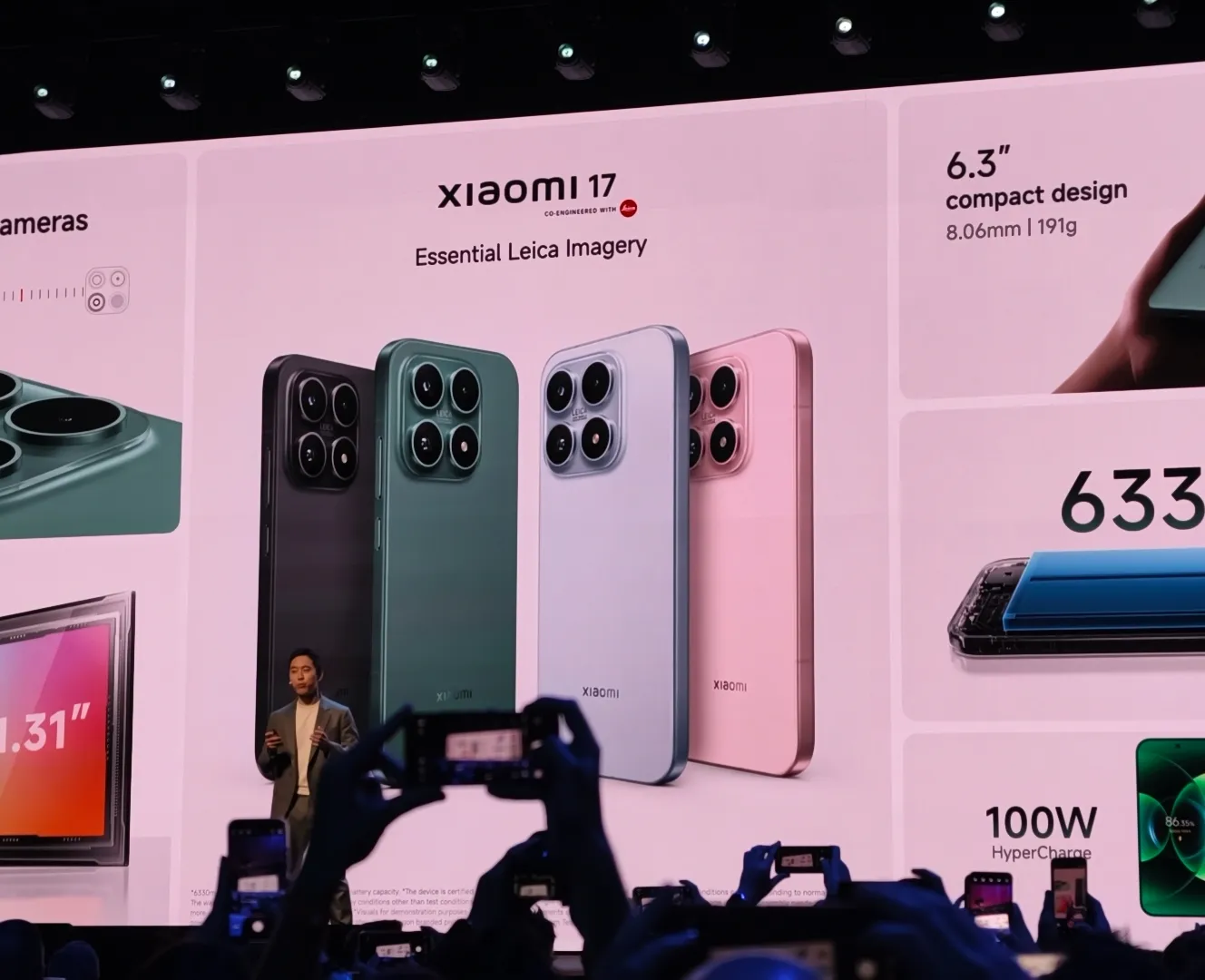
The Xiaomi 17 is the phone that will actually matter in India. The Ultra is aspirational. The Leitzphone is a statement. This one is the instrument — the phone that sits in Mi Stores, that gets picked up by the person with Rs 85,000 and genuine options, that competes in the segment where Samsung's Galaxy S26 and OnePlus's latest flagship are also making persuasive arguments. It is, therefore, the phone that most needs to be excellent on its own terms rather than in the reflected glory of its more expensive siblings.
It is. Physically, the Xiaomi 17 draws more directly from Apple's design vocabulary than its siblings — flat rails, flat back, a camera island in the upper-left corner that echoes the iPhone 16 Pro's geometry without replicating it. At 191 grams and 8.06mm it sits in the hand with a solidity that makes its "standard" designation feel mildly insulting. The 1.18mm bezels are tighter than those of competing Android flagships at equivalent prices and competitive with Apple's own numbers. The 6.3-inch M10 panel — sharing the same non-pentile architecture and 3,500-nit ceiling as the Ultra — is, in the first impression at the Catalonia Convention Center today, extraordinary: the kind of display that makes you question whether you ever needed a larger screen or simply assumed you did.
The camera system rewards closer inspection. The Light Fusion 950 main sensor at 1/1.31 inches is smaller than the Ultra's 1-inch part but larger than the main sensors in competing Android flagships at this price point. The floating telephoto delivers 5x optical-level zoom — a reach that sits at the top of the Android tier at this price point, and more than sufficient to make the competition justify its own spec sheets. All three rear sensors are 50 megapixels. The front camera is 50 megapixels. Xiaomi has quietly built an argument that uniform sensor quality across the array is itself a premium differentiator, in the manner of a restaurant that sources every ingredient with equal care rather than splashing out on the centrepiece and cutting corners on the sides.
The detail that produces the most enjoyable cognitive dissonance is the battery. The Xiaomi 17 — the smaller, cheaper phone — ships with a 6,330mAh Surge Battery. The Ultra ships with 6,000mAh. An iPhone 17, for reference, carries approximately 3,500mAh. The Xiaomi 17 has, therefore, a battery nearly double the size of Apple's current standard flagship, paired with 100W wired charging that replenishes it in the time it takes to have a cup of coffee and a reasonable argument about whether 100W charging is necessary. Having experienced 90W on the Ultra for a fortnight in Delhi, the answer is yes, it is necessary, and returning to anything slower feels like going back to dial-up after broadband.
The Market: Why All of This Matters Right Now
The backdrop to today's Barcelona launch is a global smartphone market in the early stages of a structural convulsion. IDC projects shipments will fall 12.9 per cent in 2026 — the sharpest annual contraction on record — as memory chip supply, increasingly commandeered by AI data centres, makes inexpensive devices economically unviable to manufacture and price competitively. Counterpoint Research's Yang Wang notes that LPDDR4 supply — the memory type that powers affordable phones — is shrinking faster than anticipated. The sub-$200 segment, globally, faces a decline of more than 20 per cent.
In India, Counterpoint projects a 2 per cent market contraction in 2026, with average selling prices rising 5 per cent after a 9 per cent increase in 2025. The premium segment above Rs 30,000 grew 15 per cent year-on-year in 2025 and hit a record 23 per cent share of total shipments. The ultra-premium segment above Rs 45,000 reached 17 per cent share in Q4 2025 — also a record. India's smartphone ASP hit $294 in Q3 2025, up 13.7 per cent year-on-year. The country is, against all received wisdom, going premium — and doing so with an urgency that suggests the trend is structural rather than seasonal.
Xiaomi knows this better than most, having experienced the painful reverse in early 2025 when its India shipments fell 37 per cent year-on-year in Q1, pushing the brand to seventh place and triggering the kind of public introspection that tends to precede genuine strategic change. Globally, it closed 2025 as the world's third-largest smartphone brand with 165.3 million units and a 13.1 per cent share, per IDC — a position of real scale whose India expression has been, until now, frustratingly volume-dependent. The 17 series represents the clearest signal yet that Xiaomi grasps the cost of another Q1 2025 — and that the only sustainable response to a contracting budget market is a credible premium alternative.
First Impressions: What the Evidence Suggests So Far
Two weeks in Delhi with the Chinese 17 Ultra, and an afternoon in Barcelona with the global lineup. That is the evidence base for what follows — an informed first impression that the full test will either confirm or complicate, rather than a verdict demanding one.
The Xiaomi 17 Ultra promises to be among the most capable Android flagships of 2026. The 1-inch LOFIC sensor, the 200-megapixel variable telephoto, the HyperRGB non-pentile display, and the Snapdragon 8 Elite Gen 5 platform constitute a hardware combination that places it in genuine contention with any Android flagship currently shipping. The open question — the one that requires weeks of side-by-side testing rather than Barcelona afternoon impressions — is whether Vivo's computational photography, operating on arguably less capable native hardware, can match or exceed what Xiaomi's Leica co-development produces in real-world conditions. The hardware case for the Ultra is compelling. The software case awaits the full test.
The Xiaomi 17 promises to be the more important phone for India — the one that faces real competition from Samsung, OnePlus, and Google at a price point where the decision is genuinely difficult. On first handling today, it feels like a phone that earns its place in that conversation rather than crashing it uninvited. The battery alone — 6,330mAh with 100W charging — is a proposition that its competition at equivalent prices will struggle to match.
The Leitzphone is a collector's object masquerading as a smartphone, and an extraordinarily well-executed one. The Camera Ring is the most satisfying physical camera control on any phone I have handled. The Leica Essential mode, in early testing, produces images with a character that goes beyond what the spec sheet can convey. Whether it justifies €1,999 is a question that depends entirely on whether you are the kind of person who has ever seriously considered a Leica M9 — and if you are, you already know the answer.
The fuller picture — tested across weeks, across light conditions, across the thousand daily interactions that reveal a phone's true character — comes with the review. For now, from a suite in Barcelona with Catalonia outside the window and three of the year's most ambitious Android phones on the table: the impression is that Xiaomi has done something genuinely interesting here. The red dot is earning its place. |





