Five days, countless conversations, a handful of imperfections and more artificial intelligence (AI) than my very human brain could comfortably absorb, that, in essence, was my week at the India AI Impact Summit 2026. Being surrounded by so many sharp minds under one vast roof was both exhilarating and faintly intimidating; I briefly wondered whether my own modest intelligence qualified as artificial. As I walked out of the Supreme Court metro station toward the venue, it felt less like attending a conference and more like stepping into a living laboratory of the future.
When I first walked into the venue in Delhi, it felt less like a conference and more like the global Olympics of technology. For the first time, such a large-scale AI gathering was being hosted in the Global South and India clearly wanted the world to notice. Delegations, global bosses, researchers, policymakers, everyone seemed to be here.
And the guest list? Straight out of a dream Hollywood tech movie. From Sundar Pichai representing Google to Sam Altman of OpenAI, the global AI leadership had clearly marked attendance. On the Indian side, the corporate leaders were equally visible as Mukesh Ambani, Natarajan Chandrasekaran and Gautam Adani were all part of the larger conversation about where AI goes next.
For me, this was gold. Being a reporter, every hallway conversation sounded like the beginning of a headline.
AI Moment And The Robot That Did Not Quite Help
Inside the summit, AI was not just a buzzword; it was everywhere. Healthcare demonstrations, financial tools, farming innovations, education platforms, if an industry existed, someone had probably trained an algorithm for it.
Companies were racing to make AI speak, listen and translate in real time. Live speech-to-speech translation was the star attraction. Platforms were showcasing how conversations could seamlessly jump across languages, something very relevant and important for India.
And of course, there were robots. Because no major tech summit is complete without at least one machine politely waving at confused journalists. However, not all that glitters is not gold. One such moment came from a demonstration linked to Galgotias University. The robot on display, reportedly imported, was meant to showcase AI capability. Instead, thanks to a communication mess and some awkward moments, it became an unintended talking point of the summit. Eventually, organisers stepped in and the exhibit was removed.
Still, if tech events have taught us anything, it is that demos sometimes fail, just usually not in front of the entire world.
Security Vs Journalism
If the robots were interesting, the security arrangements were… unforgettable. Oh dear, day one felt less like entering a conference and more like attempting airport immigration during peak holiday season. Laptops were questioned. Cameras were examined suspiciously. At one point, several reporters, including some of my colleagues, were told certain equipment couldn’t go inside.
Naturally, this created confusion because reporters, as a species, tend to bring every single thing they have in the bag. VIP movements added another layer of excitement. Roads were blocked, access points suddenly changed, and even nearby metro access was affected for a while. The city traffic, already famous for its patience-testing abilities, rose to the occasion.
However, by day three, everyone seemed to have collectively figured things out. Entry became smoother, tempers cooled, and the summit finally felt like a working newsroom rather than a logistics puzzle.
The Media Centre Surprise
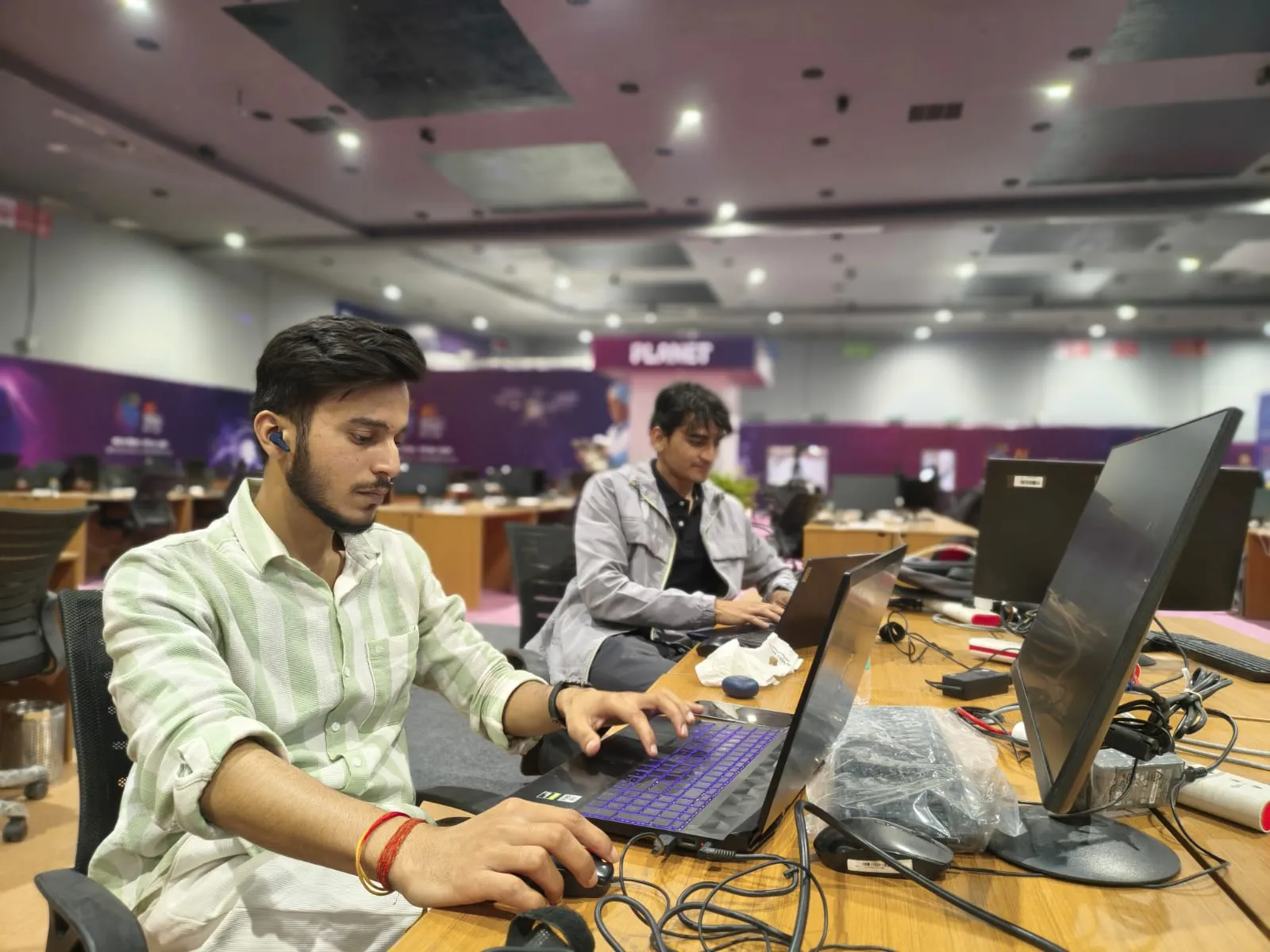
One thing the organisers absolutely got right was the media centre. And I say this as someone who has spent time in many press rooms that looked like they were planned five minutes before the event. This one was huge. Nearly a thousand journalists could work at once. Every desk had a system, stable internet, live screens showing sessions, announcements for press briefings, and constant updates. For a reporter racing deadlines, it was the closest thing to comfort.
Food and coffee also appeared regularly, a detail journalists never forget (to enjoy). Sitting shoulder to shoulder with international reporters, exchanging notes and perspectives, added another layer to the experience. Everyone was chasing different angles on the same story.
Covering the summit for five days felt like watching the future being negotiated in real time. Yes, there were glitches, security confusion, a robotic embarrassment and traffic adventures that Delhi commuters will remember. But beyond those moments, the scale of the conversations stood out. The announcements, the informal chats, the reactions in hallways, none of that shows up fully in official press releases. And somewhere between filing stories, chasing quotes, and drinking too much coffee in the media centre, I realised something: covering a global tech summit is not just about AI, it is also about observing the very human systems trying to organise it. |





