 Summary of this article Summary of this article
- Under the new arrangement, MGNREGA funding will be shared between the Centre and states in a 60:40 ratio instead of the earlier 90:10 ratio
- A 60-day “no work” window has been introduced, meaning workers will not be able to demand MGNREGA work for two months during the agricultural season
- The Jharkhand government has openly opposed the G-RAM-G Bill, with the ruling parties organising protests across the state
Fifty five-year-old Phulwa Devi is counting her workdays. By the end of the financial year, she hopes her attendance under the aegis of the Mahatma Gandhi National Rural Employment Guarantee Act 2005 (MGNREGA) will touch 80 days. By the final month of the previous year, she had already completed 50 days of work. With three months still remaining in the current financial year from April 2025 to March 2026, she believes the target is within reach.
Standing at the edge of her mud-roofed house, Phulwa repeats the word MGNREGA almost reflexively, as if her sentences cannot proceed without it. Over the years, the scheme has come to define the rhythm of her household economy. Nine years ago, after her husband died, MGNREGA emerged as the only steady support for the family, shaping how food is arranged, expenses are planned and survival is negotiated from season to season.
Phulwa Devi says, “Before passing away, my husband worked at a brick kiln. I used to work under MGNREGA whenever work was available. After his death, I try to do as much MGNREGA work as possible. Farming gives us just enough foodgrain to eat. In the village, some people give us a little vegetable from their fields. For daily fuel, we collect firewood from the forest and for emergencies, we have one gas cylinder that lasts the whole year. We use the money from MGNREGA for the education of the children, buying oil and basic spices, for illness and for weddings and other social obligations.”
[url=]Related Content[/url]
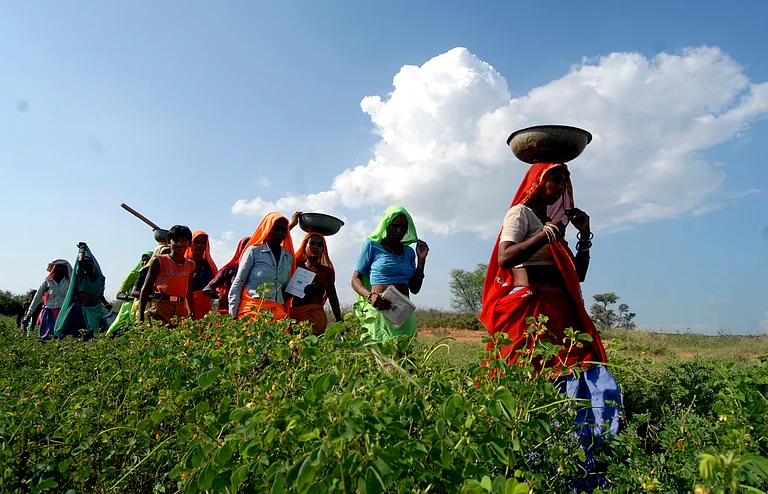 Gandhi To Ram: Dismantling Of MGNREGA And Rewriting Rural Welfare Gandhi To Ram: Dismantling Of MGNREGA And Rewriting Rural Welfare
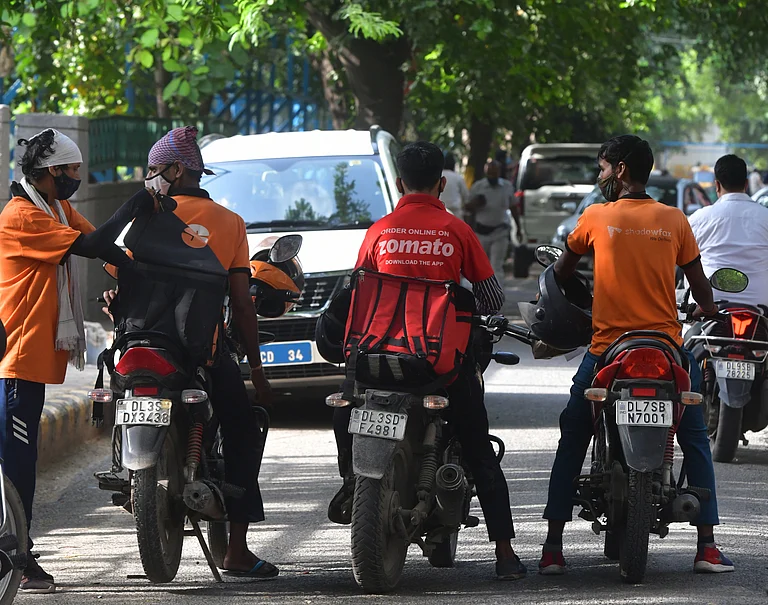 Ten Minutes To Nowhere: Is Ultra-Fast Service Delivery Model Eroding Rights? Ten Minutes To Nowhere: Is Ultra-Fast Service Delivery Model Eroding Rights?
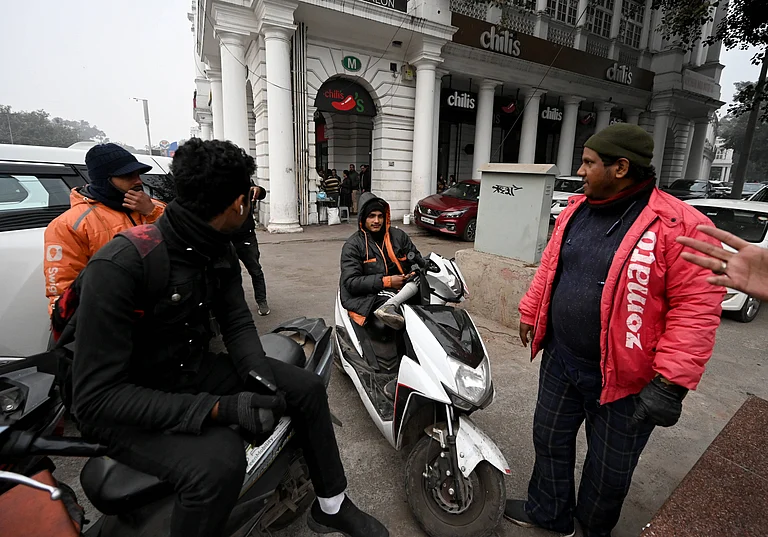 Opinion | Gig Workers Need More Protection: Analysing The New Years' Strike Opinion | Gig Workers Need More Protection: Analysing The New Years' Strike
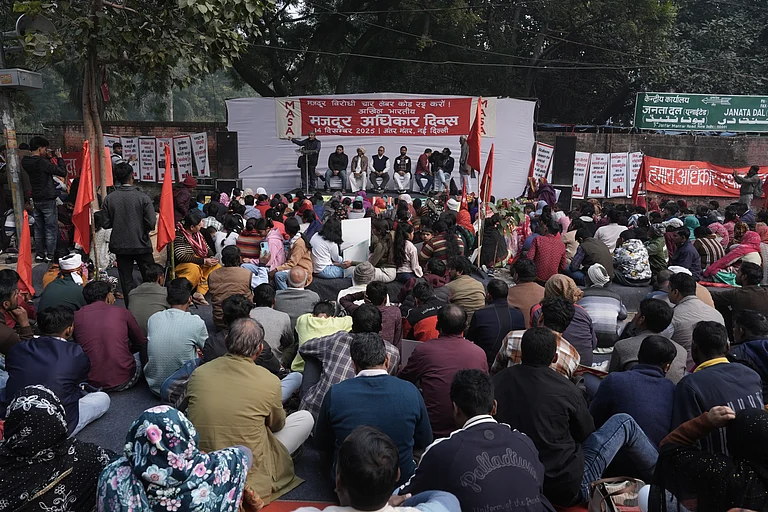 'Rights On Paper, Not In Life': Workers Protest Labour Codes 'Rights On Paper, Not In Life': Workers Protest Labour Codes
[url=]Related Content[/url]
Gandhi To Ram: Dismantling Of MGNREGA And Rewriting Rural Welfare
Ten Minutes To Nowhere: Is Ultra-Fast Service Delivery Model Eroding Rights?
Opinion | Gig Workers Need More Protection: Analysing The New Years' Strike
'Rights On Paper, Not In Life': Workers Protest Labour Codes
Phulwa Devi, a mother of four, is from Kairo village in Jharkhand’s Lohardaga district. In Jharkhand, on average, less than 50 days of work is provided per MGNREGA job card instead of the promised 100 days, as per available data. Phulwa Devi, however, is among the few who received 80–90 days of work in a year. In 2024–25, she worked for 82 days and in 2023–24, she worked for 85 days, earning approximately Rs 20,000–22,000 annually through MGNREGA wages.
When asked about changes to MGNREGA, she says she does not know much, but has heard that the guarantee of 100 days of work has been removed and is unsure what the revised Act provides.
Phulwa Devi then introduces Sandip Ravidas, who works at the NREGA Sahayata Kendra (NSK). Those working at these centres, known as saathis, are local people who help villagers understand MGNREGA schemes, assist with applications and ensure that workers receive their payments. These centres operate in every block under government oversight and most saathis were themselves MGNREGA workers in the past.
Sandip Ravidas works in the Kairo block region. He is deeply concerned not just about the renaming of MGNREGA but also about the major amendments it has undergone.
The Mahatma Gandhi National Rural Employment Guarantee Act (MGNREGA) has been renamed by the Government of India as VB–G RAM G, which stands forViksit Bharat– Guarantee for Rozgar and Ajeevika Mission (Gramin), now commonly referred to as “G RAM G.” |





