For the last couple of years, the Consumer Electronics Show had effectively rebranded itself as a glitzy automotive salon that just happened to have some laptops and TVs around it. But this year, in the frigid desert cold of Las Vegas, we witnessed a definitive vibe shift. While the car candy was still there—Mclaren’s world-champion F1 car and the exquisite Bugatti Tourbillon included—the emotional centre of gravity moved. The crowd’s attention followed motion, machines that weren't just "smart," but physical. The show’s own signals backed this up: submissions in robotics and drones for the CES Innovation Awards jumped by a third, crossing 3,600-plus entries. This is a directional warning flare: the industry is reorganising around "Physical AI"—systems that can see, reason, and act in the real world.
Before the robots took over, the automotive guard made its final stand. The McLaren F1 car served as a reminder of what pure engineering looks like when limited by physics, feeling like the tech equivalent of finding a clean patch of tarmac at the Buddh International Circuit. While impressive, its presence highlighted a shift where the "wow" factor has moved from carbon-fibre aerodynamics to the silicon-based "brains" that make such machines feel like beautiful, analogue relics. Sony and Honda’s Afeela, now in its production avatar, felt less like a car and more like a mobile PlayStation 5, proving that even the giants know the car is now just a peripheral in a software-defined world.
The Silicon Foundation Of Physical AI
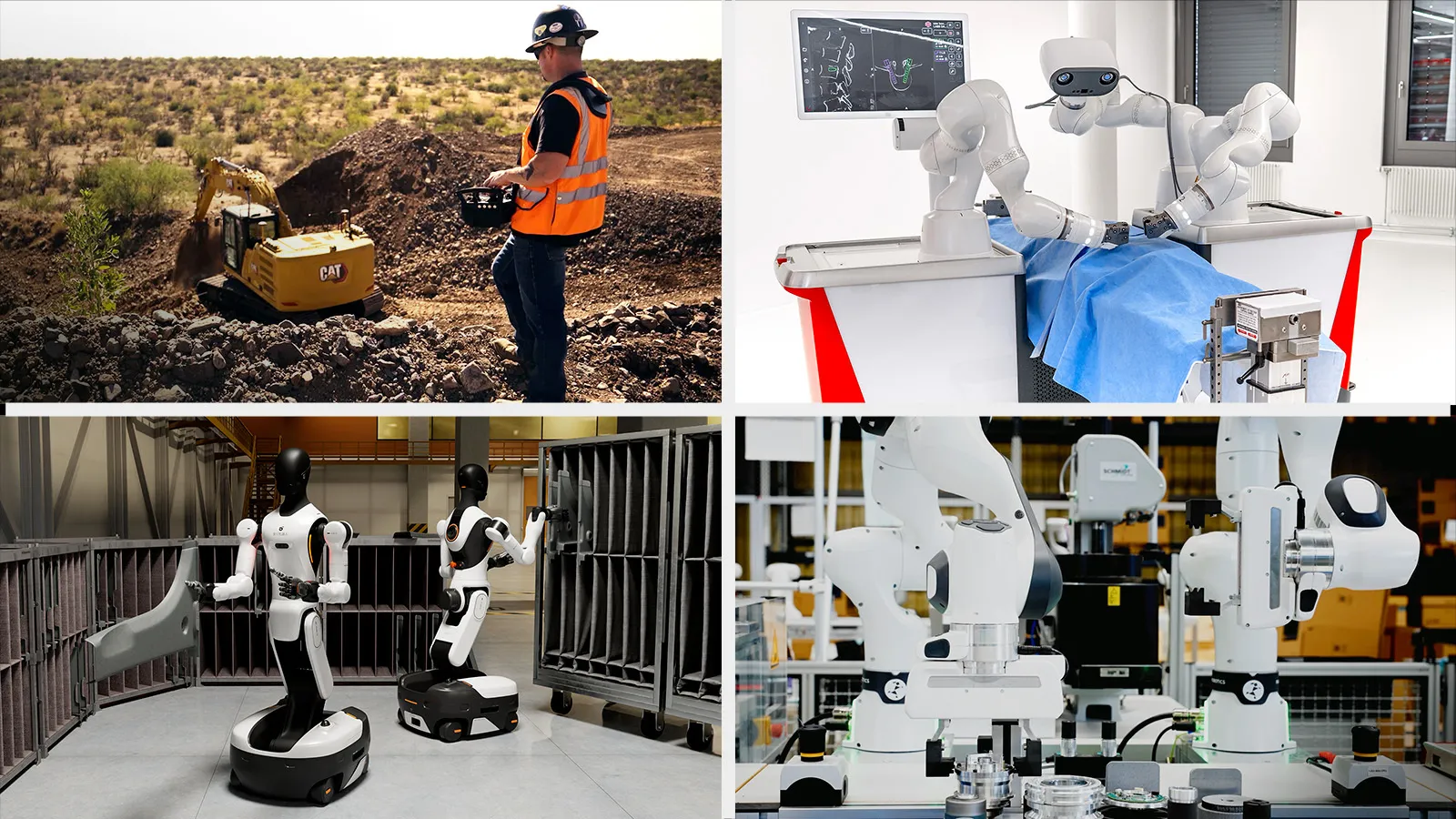
Underpinning this mechanical renaissance is a brutal arms race in silicon. NVIDIA’s launch of the Cosmos and Isaac GR00T platforms has provided the world models necessary for robots to perceive and reason about physical space. This stack allows machines to learn tasks through simulation before they ever touch a factory floor, drastically reducing training times. In the world of high-performance compute, this is the "ChatGPT moment" for robotics—shifting from generative text to generative, physical action. As Jensen Huang noted, breakthroughs in physical AI are unlocking entirely new applications by allowing models to understand the real world and plan actions autonomously.
Dragonwing Challenges The Status Quo

Qualcomm is not sitting still, launching the Dragonwing 1Q10—a dedicated 18-core CPU designed to be the “robot brain” for everything from household bots to full-size humanoids. Positioned as a direct competitor to NVIDIA’s Jetson, Dragonwing is built to handle the low-latency, safety-grade requirements of physical agency. It signals a move toward a more modular, scalable architecture for manufacturers who want to avoid being locked into a single proprietary ecosystem, much like the transition from bespoke pedals to a standardised pedal box in a race car.
Intel’s Industrial Gambit
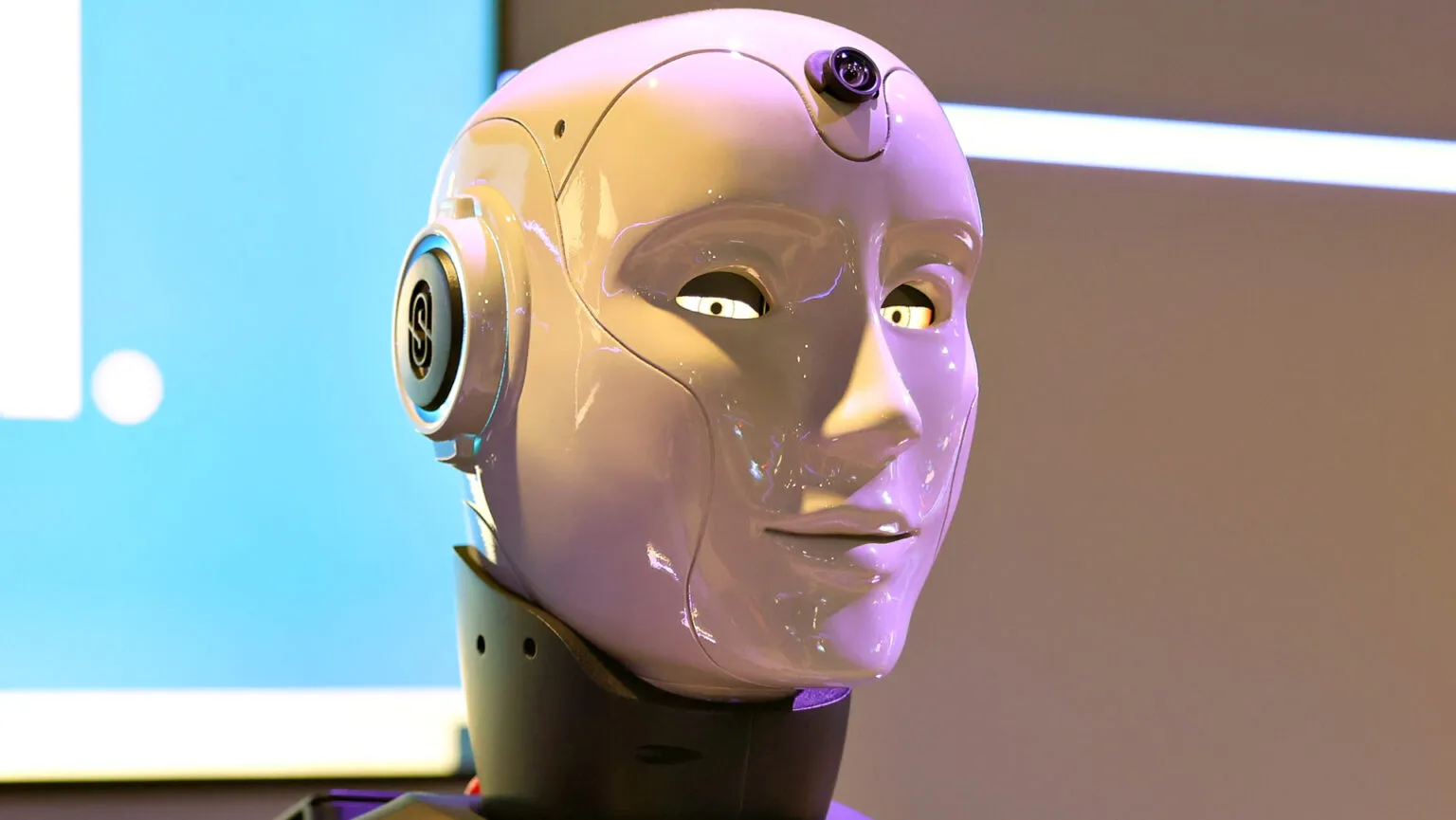
[color=hsl(0, 0%, 0%)]On the sidelines, Intel launched an armada of Panther Lake-based notebooks, but the real story is where else these chips are going. Delivering up to 180 total platform TOPS, Panther Lake is certified for simultaneous localisation and mapping (SLAM) and vision-language-action (VLA) models. Robotics isn't just a "cool demo" category; it’s an edge-compute category. When you start thinking like that, Intel’s industrial ambitions stop looking like a footnote and start looking like a plan to own the factory floor. Intel showcased the[color=hsl(0, 0%, 0%)] RoBee, a 6 feet tall, humanoid robot from [color=hsl(0, 0%, 0%)]Oversonic Robotics[color=hsl(0, 0%, 0%)] is powered by AI and created for situations that require split-second decision-making, like performing complex manufacturing tasks or assisting patients with neurological conditions such as Alzheimer's and Parkinson’s. It is powered by the latest generation Core Ultra 3 chipset
Arm Defines The New Category
Further solidifying this industry pivot, Arm announced the launch of a dedicated Physical AI business unit. By combining its automotive and robotics efforts under one umbrella, Arm is betting that the shared technical requirements of safety and power efficiency will drive the next decade of growth. This reorganisation confirms that the industry is no longer viewing robotics as a niche hobby but as a primary pillar of the global compute market.
Humanoids Step Into The Arena
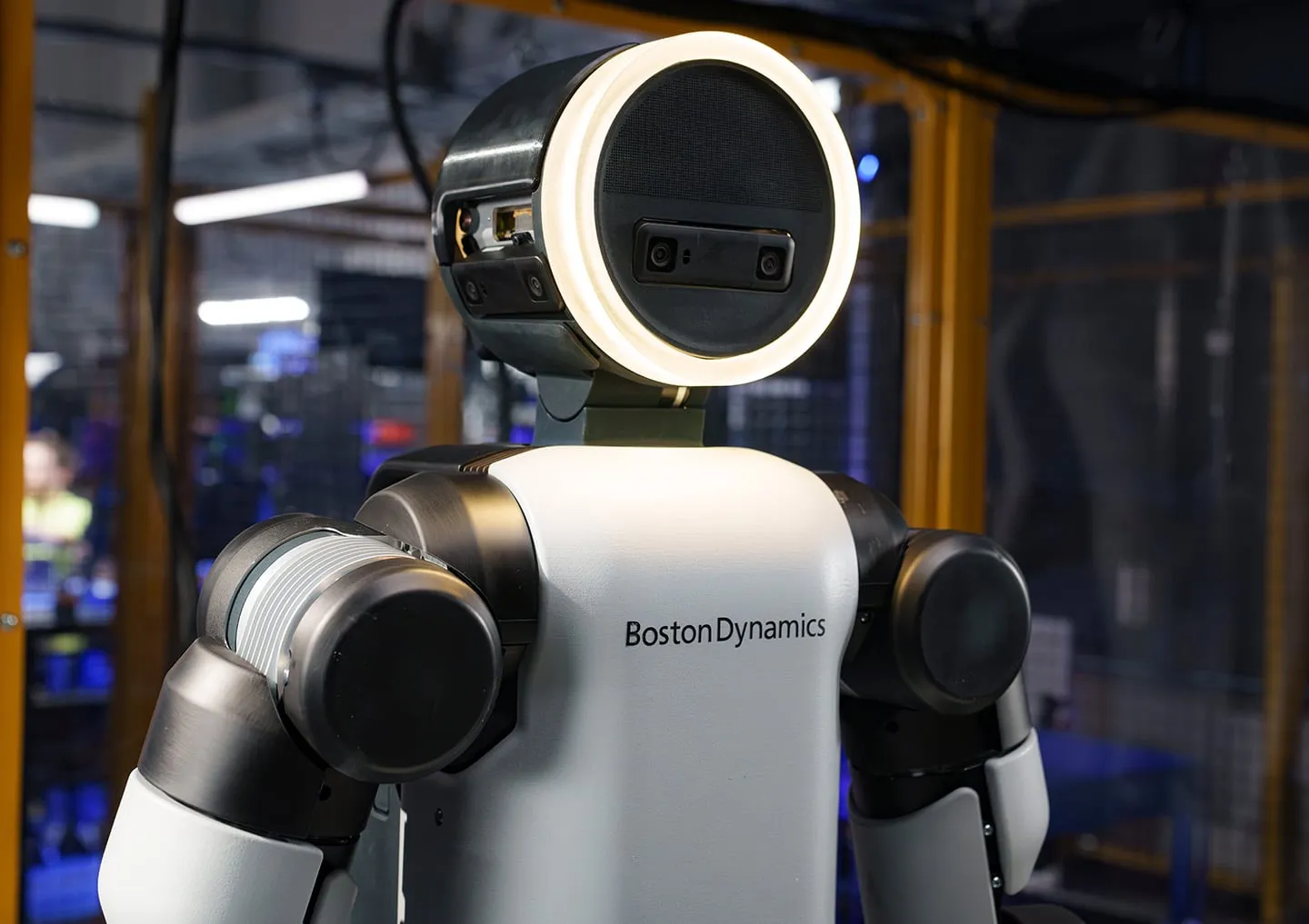
The show floor was a gauntlet of bipedal ambition led by the production-ready electric Atlas from Boston Dynamics. Ditching its old hydraulic systems for electric power and reinforcement learning, Atlas now moves with a naturalistic gait that makes its predecessors look like clunky antiques. Integrated with Google Gemini AI, it is designed for "parts sequencing" in factories and is slated to ship to Hyundai’s Metaplant in the coming months, representing a tangible move from laboratory acrobatics to actual industrial labour.
Athleticism Meets Commercial Reality
The Unitree H2 humanoid stole headlines with a demo featuring flying kicks and backflips, showcasing the extreme agility required for unpredictable environments. Its smaller sibling, the G1, was seen participating in boxing matches that stopped people mid-walk. Unlike many prototypes, Unitree’s robots are already shipping, with prices for the G1 starting at an aggressive $16,000. It is the tech equivalent of a garage band finally getting a stadium tour—raw, energetic, and surprisingly affordable.
Dexterity Beyond The Lab
Sharpa Robotics drew constant crowds in the North Hall with a humanoid that moved between tasks with unnerving ease. In one sequence, the robot rallied with human players at a ping-pong table before pivoting to deal blackjack cards. The core of this demo was the SharpaWave hand, which features 22 active degrees of freedom and tactile sensors in each fingertip, allowing it to judge pressure and texture with a finesse that traditional industrial grippers lack.
The Service Face Of AI
Realbotix unveiled Melody, an open-source humanoid designed for companionship and service. Melody features upgraded Dynamixel P-Series motors for more fluid, human-like gestures and is built on a modular system that allows for easy character customisation. By integrating with third-party platforms like ChatGPT, Melody is being positioned for roles in healthcare and hospitality where "lifelike" interaction is the primary requirement, sitting at the intersection of empathy and ethics.
Stair-Climbing Becomes Domestic Reality
The quest for the "Zero Labour Home" led to a breakthrough in domestic robotics via the Roborock Saros Rover. This research prototype features a unique wheel-leg design that allows it to climb full staircases, addressing the final boss of robot vacuums: the multi-storey house. While still a concept, its ability to navigate steps up to 25 centimetres high suggests that the era of carrying a vacuum upstairs is nearing its end. It changes the economics of the category from "one vacuum per floor" to a single, truly autonomous system.
The Robotic Arm Trade-Off
Roborock also showcased the Saros Z70, which features a functional OmniGrip robotic arm designed to pick up socks and shoes. However, the demo served as a lesson in engineering trade-offs; to fit the arm, the Z70 sacrifices some cleaning power and bin capacity compared to traditional models. It highlights that even in the age of AI, physical space and battery life remain the ultimate constraints, much like choosing between downforce and straight-line speed on a racetrack.
Dreame’s Modular Approach
Dreame countered with its own stair-handling vision, the Cyber X. Unlike integrated designs, the Cyber X uses a biomimetic quadruped crawler module that acts as a transport for a separate vacuum unit. This modular approach allows the "carrier" to handle the heavy lifting of stair navigation at 0.2 metres per second, while the vacuum focuses on cleaning. It’s a clever solution to the weight and power problems that plague all-in-one climbing robots in multi-level environments.
LG’s Vision Of The Kitchen

LG Electronics presented its CLOiD home robot, a torso-based unit on wheels equipped with two seven-degree-of-freedom arms. In a "real-world" home setting demo, CLOiD was seen retrieving milk from a refrigerator and placing a croissant into an oven. Using LG’s new AXIUM actuators and vision-language-action (VLA) models, the robot is designed to coordinate household tasks across the ThinQ ecosystem, moving the smart home from "connected" to "autonomous."
AI Takes To The Water
Outdoor robotics expanded with the Beatbot AquaSense X, a premium pool robot that introduces automated water clarifying. Equipped with a quad-core AI and 20 sensors, it maps the pool floor and walls with high precision. Announced at $4,250, it offers a "surface parking" feature that brings the robot to the edge for easy retrieval, pushing the boundaries of what early-adopter hardware can do.
Hands-Free Outdoor Maintenance
Mammotion unveiled the Spino S1 Pro, which solves the most annoying part of pool cleaning: the heavy lift. The Spino S1 Pro includes the AutoShoreCharge base, a shore-landing system that uses a robotic arm to identify and lift the cleaner out of the water for automatic charging. It’s a complete loop of automation that removes the human from the maintenance cycle entirely, treating outdoor chores with the same "set and forget" mentality we apply to our digital backups.
Why This Matters For India
For India, the transition to Physical AI is a manufacturing and policy imperative. While worldwide humanoid installations jumped to 16,000 units in 2025, with a staggering 80 per cent in China, India is emerging as a critical hub for robotics development. As global players look to diversify supply chains, India’s Production Linked Incentive (PLI) schemes should pivot to include the assembly of high-torque actuators and sensors. India’s strength in software means we are well-positioned to lead in "Edge AI" training. Creating the localised datasets required for robots to navigate the chaotic, high-density environments of Indian cities will be a massive opportunity for Indian startups to "export the hard mode."
What This Means Next
We are entering a phase where robotics hardware is finally catching up to AI software. By 2027, total humanoid installations are expected to exceed 100,000 units, with logistics and manufacturing representing 72 per cent of that growth. The "robot brain" wars will determine the standards of this new era, likely favouring open-source frameworks that allow for rapid iteration across different mechanical bodies. The real tell will be repeatability: whether a robot can do a simple job 10,000 times without drama.
What Could Slow This Down
The primary friction remains the "sim-to-real" gap; simulation is perfect, but a Vegas show floor is messy. Costs also remain a massive hurdle, with production humanoids likely to stay above $20,000 for several years. Finally, trust and safety regulation lag behind the technology; a logic error in a 50-kilogram machine is a physical liability that no amount of generative AI can currently talk its way out of.
CES 2026 Robotics: The Core Specs That Mattered
Robot/Platform Name
| Category
| What it Demonstrated
| Core Enabling Tech
| Availability
| Indicative Price (USD)
| Boston Dynamics Atlas
| Humanoid
| Parts sequencing / Industrial
| Electric Actuators / Gemini AI
| Q2 2026 (Committed)
| Not Disclosed
| Unitree G1
| Humanoid
| Athleticism / Boxing
| 360° Vision / High-Torque Motors
| Shipping Now
| $16,000
| NVIDIA Cosmos
| Software
| Physical World Reasoning
| VLM & VLA Models / Blackwell
| Available Now
| Platform Licensing
| Qualcomm Dragonwing
| Compute
| Multi-modal Robot Brain
| 18-Core CPU / Safety Logic
| H1 2026
| Developer Kit
| Intel Panther Lake
| Compute
| SLAM & Industrial Vision
| 18A Process / 180 Platform TOPS
| Jan 2026
| Component Pricing
| Sharpa Robotics
| Humanoid
| Blackjack / Ping-pong
| SharpaWave Tactile Hand
| Prototype
| TBD
| Roborock Saros Rover
| Domestic
| Stair-climbing navigation
| Wheel-leg hybrid design
| Research Project
| TBD
| Beatbot AquaSense X
| Outdoor
| Autonomous pool clarifying
| Quad-Core AI / 20 Sensors
| Available Now
| $4,250
|
|





