 Summary of this article Summary of this article
- We actively deconstruct the biases that have historically painted women as either pure, unblemished victims or irredeemable temptresses
- The cinematic male gaze, in the Indian rape-revenge genre, from Shekhar Kapur's Bandit Queen to recent blockbusters like Maharaja, relies on extreme shock value and voyeurism.
- In Hathras, caste-based sexual violence against a 19-year-old Dalit woman was actively rewritten by newsrooms into a sensationalized "love affair"
Dasyu-Sundari. Vishkanya. Seductress. Black-Widow. Characterless. These are not just words; they are cages. For decades, whenever a woman has found herself at the centre of violence, power, survival, or controversy, society has eagerly reached for a sensationalised label. We categorise them to make their existence digestible. We flatten their complexities into recognisable archetypes, and in doing so, we strip them of their humanity, their agency, and their truth.
Nowhere is this dichotomy more glaring than in the story of our cover subject, Phoolan Devi. To those who understood her struggle against an incredibly violent caste and gender hierarchy, she was a true 'Devi', a figure demanding cultural and narrative justice. She was a woman who survived unspeakable brutality and fought back in a language the system understood. But to the establishment, the State, and the masses, she was deliberately reduced to a vengeful, bloodthirsty outlaw. The media played a deeply complicit role in this framing. Newsrooms built her up as a mythological femme fatale of the ravines, a cinematic trope designed to titillate rather than inform. As we note on our story by Zenaira Bakhsh, the press and the public were almost disappointed when they finally saw her: a small woman in a cardigan with wild hair, who entirely defied the hyper-sexualised, cinematic script they had pre-emptively written for her.
[url=]Related Content[/url]
 Replug: All We Need Is Love: Fusing The Personal And The Political Replug: All We Need Is Love: Fusing The Personal And The Political
 Love Unbound: The Politics And Poetry Of Loving Love Unbound: The Politics And Poetry Of Loving
 The Purpose Of Marriage: When Women Say Yes To Love, No To Systems Of Men The Purpose Of Marriage: When Women Say Yes To Love, No To Systems Of Men
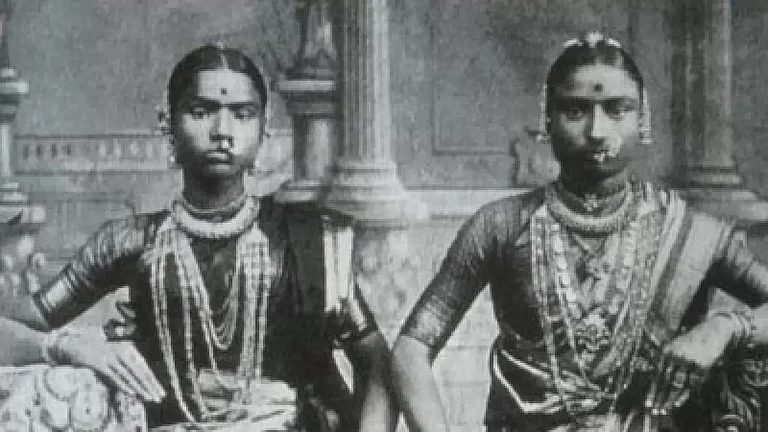 A Report Identifies 23,000 Former Devadasis; Recommends Special Package for Them A Report Identifies 23,000 Former Devadasis; Recommends Special Package for Them
[url=]Related Content[/url]
Replug: All We Need Is Love: Fusing The Personal And The Political
Love Unbound: The Politics And Poetry Of Loving
The Purpose Of Marriage: When Women Say Yes To Love, No To Systems Of Men
A Report Identifies 23,000 Former Devadasis; Recommends Special Package for Them
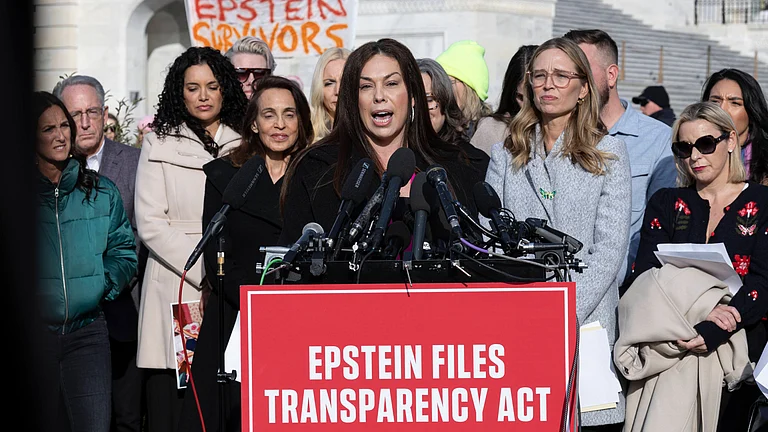
Making Of The ' erfect' Epstein Victim erfect' Epstein Victim
BY Zenaira Bakhsh |





