I walked into Galaxy Unpacked 2026 at the Palace Of Fine Arts in San Francisco carrying fifteen years of opinions about Samsung phones, a healthy suspicion of demo conditions, and the specific kind of scepticism that develops when you have watched every Exynos chip since the 990 turn a promising flagship into a pocket-sized heat lamp. What I left with was considerably more interesting than I expected.
The Galaxy S26 series — S26, S26+, and S26 Ultra — is the most technically refined Samsung has built in several years. The Galaxy Buds 4 Pro are the best earbuds Samsung has ever made, and genuinely competitive with the best in the business. And the Flex Magic Pixel privacy display on the S26 Ultra is, quite simply, the single most immediately useful display innovation I have encountered on a smartphone in the better part of a decade. The three-agent AI system works in ways that feel genuinely sci-fi without the hollow theatre that usually accompanies that adjective in a press release. The cameras have narrowed the gap with the Chinese competition in meaningful, measurable ways.
There are also things I want more time to verify before I commit to them. The battery. The sustained thermal behaviour of the Exynos 2600 under serious gaming load. Whether the AI orchestration holds together under conditions less controlled than a Samsung demo suite. Those are questions for the full review. What follows is what I know now — from hands, ears, and eyes — after spending time with these devices in San Francisco.
The S26 Ultra: Hyper-Refined, Immediately Familiar
The design of the Galaxy S26 Ultra represents what I would call hyper-refinement — a word I use deliberately rather than "incremental," because the cumulative effect of the changes is more satisfying than any single alteration would suggest.
Samsung has been working the same fundamental design language since the Galaxy S22 Ultra, and with each generation the proportions have become more confident. The S26 Ultra extends this with rounded corners — a softer departure from the architectural severity of the S24 Ultra — and a camera module that borrows the rounded island elements first seen on the Galaxy S25 Edge. The frame is armour aluminium, and at 7.9 millimetres and 214 grammes the Ultra is slimmer and lighter than its predecessor. In the hand, this matters immediately. The S25 Ultra always carried a slight sense of substance that sat right at the boundary between "premium" and "my wrist is complaining." The S26 Ultra stays clearly on the correct side.
The standard S26 is, to use the only accurate description available, uber cute. It is a phone that achieves the genuinely rare distinction of feeling fun to hold — compact, responsive to one hand, possessed of a personality that the Ultra's architectural seriousness deliberately foregoes. The design refinement is less visible on the S26 than on the Ultra, and if you were hoping Samsung had dramatically reimagined the baseline model, the answer is that it has continued its evolutionary programme rather than started a new chapter. At 167 grammes and 7.2 millimetres, it is also the most pocketable phone in the S26 family by a meaningful margin. The S26+ sits precisely where you would expect it: for the buyer who wants the visual real estate of the Ultra without committing to the Ultra's price, it delivers the 6.7-inch screen in a slightly more manageable format.
The Display That Disappeared From Everyone But Me
The Flex Magic Pixel privacy display is the feature I was most sceptical about before I saw it in person, and it is now the feature I am most enthusiastic about after. That reversal is worth noting, because my threshold for display technology scepticism is calibrated by years of watching "revolutionary" panels turn out to be evolutionary panels with better marketing.
This is different. The moment the S26 Ultra's display goes off-axis — and I tested this repeatedly, at various angles, in various lighting conditions — the screen becomes visually inaccessible to anyone not looking at it directly. The degree of privacy is immediate and comprehensive. Sitting next to someone on a plane, in a metro carriage, in the back of a cab with a colleague glancing sideways — the screen simply disappears from their perspective while remaining entirely clear to mine. Samsung's implementation offers two modes: Maximum Privacy Protection, which obscures all side views comprehensively, and Partial Screen Privacy, which intelligently limits visibility for notification pop-ups while leaving the broader display accessible. Users can configure it to activate automatically when entering PINs and passwords or when opening selected applications — which means the system can be as assertive or as restrained as the situation demands.
The practical dimensions of this are hard to overstate if, like me, your phone is also your professional instrument. Banking applications, WhatsApp threads, document previews, source communications — all of it now operates in a fundamentally different privacy context. Samsung drew a direct lineage to the glare-free display introduced with the Galaxy S24, and the intellectual connection is clear: both technologies are about asserting the screen's relationship with its owner rather than its environment. The Flex Magic Pixel is simply a more radical expression of the same principle.
The caveat I am carrying into the full review concerns normal viewing. Privacy display technology has historically involved compromises — reduced brightness, slightly warped colour temperature, a faint diffusing effect at direct angles. Samsung's press materials confirm that "some changes in image quality may occur outside the viewing range" when the feature is active — which is honest, and which reviewers will quantify. In Samsung's demo conditions, with excellent ambient lighting and a handset that had presumably been optimised for the occasion, the impact in direct-facing normal use was imperceptible. Whether that holds across varied daily conditions — and whether Maximum Privacy mode exacts a visible toll on brightness or colour fidelity when active — is a question my calibration tools will answer in March.
The philosophical implication, regardless of how that calibration resolves, is worth sitting with. The smartphone screen has been a fundamentally public object pretending to be a private one for fifteen years. Everyone has developed some physical choreography for the gap — the body-turn, the reflexive brightness kill, the pocket-shove at a notification from precisely the wrong person. The Flex Magic Pixel does not narrow that gap incrementally. It eliminates it architecturally. Ice Universe has noted that Apple is reportedly evaluating comparable hardware-level technology for future MacBook models, with 2029 cited as a potential window — which, if accurate, gives Samsung a first-mover lead measured not in months but in product generations.
Performance: The Smoothest Galaxy, From Either Chip
One UI 8.5 running on Android 16 is visually familiar — the substantive changes are in behaviour rather than appearance, a series of refinements so subtle individually and so satisfying collectively that the phrase "world-class software refinement" is earned rather than promotional. The S26 series across the board feels amongst the smoothest phones I have tested this year. I spent time with both the Exynos 2600 variants — the S26 and S26+, which are the versions India receives — and the Snapdragon 8 Elite Gen 5 For Galaxy in the S26 Ultra, and the subjective daily-use experience between the two is essentially indistinguishable.
The Snapdragon 8 Elite Gen 5 For Galaxy in the Ultra delivers 19 per cent CPU improvement, 39 per cent NPU improvement, and 24 per cent GPU improvement over the Galaxy S25 Ultra — figures that translate directly into the effortless multi-tasking and AI processing I experienced in San Francisco. To sustain that performance, Samsung has redesigned the Vapour Chamber with thermal interface material positioned along the sides of the processor, allowing heat to spread more efficiently across a larger surface area than the S25 Ultra's architecture permitted. In practical terms: the S26 Ultra ran without complaint through everything I threw at it during the briefings.
The Exynos 2600 story deserves its own moment of honest reflection, because history demands it. The Exynos 990 in the Galaxy S20 produced thermal performance so poor that it altered Samsung's regional chip strategy for the next three generations — the silicon equivalent of a rock band releasing an album so catastrophic they spent three years in the studio quietly pretending it never came out. The 2600 is emphatically not that chip. Built on Samsung Foundry's SF2 node at 2 nanometres using Gate-All-Around transistor architecture — the first 2nm chip to ship in mass-market commercial quantities anywhere on the planet — it ran without incident through everything I tested in San Francisco. Sustained camera processing, multi-agent AI tasks running simultaneously, extended application switching: the phone remained composed throughout. Whether that composure extends to 45 minutes of BGMI at maximum settings in a 35-degree Delhi afternoon is the specific question I will be testing in the full review. The early indication is genuinely encouraging.
India, it bears repeating, receives the Exynos 2600 in the S26 and S26+. This is not a consolation chip. It is the most advanced mobile processor Samsung has ever built, and pre-launch Basemark GPU benchmarks suggest its Xclipse 960, built on AMD RDNA 4 architecture, may actually lead the Snapdragon's GPU in graphics-intensive tasks. India may be getting the better gaming chip. The full review will establish whether that advantage holds in sustained real-world conditions.
3 AI Agents: The Demo That Made My Jaw Drop
I have seen a considerable number of AI feature demonstrations over the past two years, and I have developed a reliable taxonomy for them. There is the "genuinely impressive, will work in daily use" category. There is the "impressive in the lab, collapses under real conditions" category. And there is the largest category of all: the "this involved seven developer integrations, six months of setup, and a Wi-Fi network maintained by seventeen engineers" category.
The Bixby-Gemini agent orchestration Samsung demonstrated falls, to my considerable surprise, into the first category.
The demo: I have a flight to Barcelona from San Francisco. I want an Uber to the airport. I ask Bixby, in natural language, to sort it out. Bixby coordinates with Gemini, which locates the flight information, calculates the departure time, identifies my location, opens Uber, selects the appropriate car type, and processes the payment — all while I continued doing other things on the phone. The Uber app surfaces at the confirmation splash screen, asking only for final approval. The whole sequence operated in the background, and when it surfaced, it surfaced at precisely the moment it required human decision rather than at every intervening step.
This is not a parlour trick. This is the first time I have seen multi-agent AI on a smartphone feel genuinely operational rather than aspirational. The same framework extends across dozens of application integrations. Samsung also demonstrated an AI Call Screening assistant that intercepts incoming calls, identifies probable spam through voice pattern analysis, summarises the caller's intent, and handles the exchange without the call reaching me unless I choose to engage. In a brief test, it performed exactly as described. The system also issues Privacy Alerts in real time when applications with device admin privileges attempt to access sensitive data — location, call logs, contacts — without apparent necessity, putting the user in control of permissions rather than the application.
The Bixby repositioning as a conversational device navigator is also, quietly, one of the most useful practical additions here. "Find the setting that does X" — and Bixby surfaces it, in a phone operating system that has, over many generations, accumulated enough settings that finding specific controls resembles navigating a government bureaucracy. This is the kind of feature that will not appear in spec sheets or impress anyone at a launch event but will be used by millions of people every day.
Now Nudge — the context-aware overlay system — rounds this out with intelligent surfacing: if a friend messages asking for photos from a recent trip, the phone suggests the relevant Gallery images automatically. If a message mentions a meeting, Calendar checks for conflicts. Now Brief has grown more proactive, surfacing reminders for reservations and travel updates based on personal context before you think to look for them. Perplexity, embedded at the system level with its own wake phrase and side-button assignment, handles real-time web intelligence. Three agents, each performing the task it is genuinely good at. The seams, on the evidence of one day in San Francisco, were impressively well-upholstered.
The Cameras: Catching Up Where It Counts
The camera system on the S26 Ultra has received a meaningful upgrade rather than a cosmetic one, and the area of improvement is precisely where Samsung needed it most: low-light performance and telephoto quality in challenging conditions.
The numbers are instructive. The 200-megapixel wide camera on the S26 Ultra captures 47 per cent more light than its predecessor; the 50-megapixel 5x telephoto captures 37 per cent more. These are not marginal increments — they represent the difference between a sensor that struggles in a dimly lit restaurant and one that works with it. In the demo conditions Samsung arranged, the improvement over the S25 Ultra was visible and substantive. The main camera and the 5x periscope telephoto, both equipped with wider apertures than their predecessors, produced images in near-darkness that were sharper, more detailed, and better resolved than I expected from a preview session. The gap with the best Chinese competition — Xiaomi's Ultra tier, Vivo's X series — has narrowed. Whether it closes entirely is something the full comparative review will establish.
The video capabilities represent the most significant single leap in the camera system. The S26 Ultra becomes the first Galaxy device to support APV, a professional-grade video codec that delivers visually lossless compression optimised for high-quality production workflows — meaning higher fidelity files in smaller sizes, with the option to record to external storage in real time rather than relying on the phone's internal memory. This is a workflow that iPhone users have enjoyed and Android users have coveted for years. Samsung LOG profile support, AI-assisted horizontal lock in Super Steady, and AI cropping for 8K video recording round out a video package that takes the S26 Ultra's candidacy as a serious content creation tool from theoretical to practical.
The Photo Assist suite now accepts natural language instructions for editing — "change the scene from day to night," "restore the missing part of this object," "change the outfit" — with continuous, non-destructive editing that allows each step to be reviewed and reversed. Creative Studio consolidates creation and customisation into one integrated space, letting users move from sketch or prompt to finished visual without switching applications. These are tools that lower the barrier to creative output without insulting users who know what they are doing — a balance that is harder to strike than it sounds.
One observation worth carrying into the full review: Samsung's teaser video for the low-light camera capabilities was, as the company subsequently disclosed, partially constructed using AI tools rather than filmed on the S26 Ultra itself. The demos I saw in San Francisco were live device output, and they were strong. Whether the shipped camera matches the promise of those live demos belongs to the full review.
Full Specifications
Galaxy S26 Series
Specification
| Galaxy S26 Ultra
| Galaxy S26+
| Galaxy S26
| Display
| 6.9-inch QHD+ Dynamic AMOLED 2X
| 6.7-inch QHD+ Dynamic AMOLED 2X
| 6.3-inch FHD+ Dynamic AMOLED 2X
| Refresh Rate
| 1–120Hz adaptive
| 1–120Hz adaptive
| 1–120Hz adaptive
| Dimensions
| 78.1 × 163.6 × 7.9mm
| 75.8 × 158.4 × 7.3mm
| 71.7 × 149.6 × 7.2mm
| Weight
| 214g
| 190g
| 167g
| Processor (India / Europe / Korea)
| Snapdragon 8 Elite Gen 5 For Galaxy
| Exynos 2600 (2nm GAA)
| Exynos 2600 (2nm GAA)
| Processor (US / Canada / China)
| Snapdragon 8 Elite Gen 5 For Galaxy
| Snapdragon 8 Elite Gen 5 For Galaxy
| Snapdragon 8 Elite Gen 5 For Galaxy
| RAM + Storage
| 12GB + 256GB / 12GB + 512GB / 16GB + 1TB
| 12GB + 256GB / 12GB + 512GB
| 12GB + 256GB / 12GB + 512GB
| Ultrawide Camera
| 50MP, F1.9
| 12MP, F2.2
| 12MP, F2.2
| Main (Wide) Camera
| 200MP, F1.4, 2x optical quality zoom
| 50MP, F1.8, 2x optical quality zoom
| 50MP, F1.8, 2x optical quality zoom
| Telephoto 1
| 10MP, 3x optical, F2.4
| 10MP, 3x optical, F2.4
| 10MP, 3x optical, F2.4
| Telephoto 2
| 50MP, 5x optical / 10x optical quality, F2.9
| —
| —
| Front Camera
| 12MP, F2.2
| 12MP, F2.2
| 12MP, F2.2
| Privacy Display
| Yes — Flex Magic Pixel (world-first built-in)
| —
| —
| S Pen
| Yes
| —
| —
| Battery
| 5,000 mAh
| 4,900 mAh
| 4,300 mAh
| Wired Charging
| 60W — 75% in ~30 mins
| 45W — 69% in ~30 mins
| 25W — 55% in ~30 mins
| Wireless Charging
| Super Fast Wireless
| Super Fast Wireless
| Fast Wireless 2.0
| Wireless PowerShare
| Yes
| Yes
| Yes
| OS
| Android 16 / One UI 8.5
| Android 16 / One UI 8.5
| Android 16 / One UI 8.5
| Bluetooth
| 6.0
| 6.0
| 5.4
| Wi-Fi
| Wi-Fi 7
| Wi-Fi 7
| Wi-Fi 7
| Water Resistance
| IP68
| IP68
| IP68
| Colours
| Cobalt Violet, White, Black, Sky Blue + Silver Shadow (Samsung.com exclusive)
| Cobalt Violet, White, Black, Sky Blue + Pink Gold (Samsung.com exclusive)
| Cobalt Violet, White, Black, Sky Blue + Pink Gold (Samsung.com exclusive)
|
Galaxy Buds 4 Series
Specification
| Galaxy Buds 4 Pro
| Galaxy Buds 4
| Fit Type
| Canal-fit
| Open-fit
| Design
| Blade design, premium metal finish, engraved pinch control
| Blade design, smaller earbud heads, premium metal finish
| Frequency Response
| 20Hz – 40,000Hz (40kHz)
| 20Hz – 40,000Hz (40kHz)
| Audio Quality
| 24-bit / 96kHz UHQ; wider woofer (~19.8% larger effective speaker area vs previous gen)
| —
| ANC
| Enhanced Adaptive ANC + Adaptive EQ (per ear shape, real-time)
| Enhanced ANC
| Head Gestures
| Yes — nod/shake for calls and Bixby (off by default)
| —
| Super Clear Call
| Yes — super wideband, doubles conventional Bluetooth call bandwidth
| Yes
| Microphone Placement
| Upper side of metal finish, optimised for wind noise and ANC
| —
| AI Agents
| Bixby, Google Gemini, Perplexity (Galaxy devices only)
| Bixby, Google Gemini, Perplexity (Galaxy devices only)
| Case Design
| Transparent clamshell, flat-rest orientation
| Transparent clamshell, flat-rest orientation
| Case Speaker
| Removed
| Removed
| Colours
| White, Black, Pink Gold (online exclusive)
| White, Black
| Availability
| Pre-order from 25 February; on sale 11 March
| Pre-order from 25 February; on sale 11 March
| US Price
| $249.99
| $179.99
|
A Note On Battery, The S Pen, And A Missing Magnet
The Ultra's battery holds at 5,000 mAh — the same figure as the S25 Ultra — while Samsung has reduced the physical dimensions of the phone, which represents a meaningful engineering achievement in itself. The S26+ increases to 4,900 mAh and the S26 to 4,300 mAh — both up from their predecessors. Charging speeds have improved substantially: the Ultra's Super Fast Charging 3.0 reaches 75 per cent in approximately 30 minutes on 60W wired. The battery verdict, as always, requires days of real-world use rather than demo-suite impressions.
The S Pen is retained, which is the right decision. Bluetooth functionality, however, has been removed from the stylus — which means the S Pen's remote trigger capability, previously used by a meaningful number of Ultra owners for presentation control and camera shutter release from a distance, is no longer available. For users who relied on it, this is a genuine reduction in functionality rather than a theoretical one. The absence of MagSafe compatibility is also a missed opportunity. The accessory ecosystem built around MagSafe has matured to the point where its absence represents a daily inconvenience for users who have invested in that infrastructure — particularly those who use MagSafe mounts in cars, MagSafe wallets, and the growing range of compatible accessories. Samsung's own ecosystem has wireless PowerShare and the Galaxy Ring to consider, but MagSafe's third-party breadth is currently unmatched.
The Buds 4 Pro: Led Zeppelin As God Intended
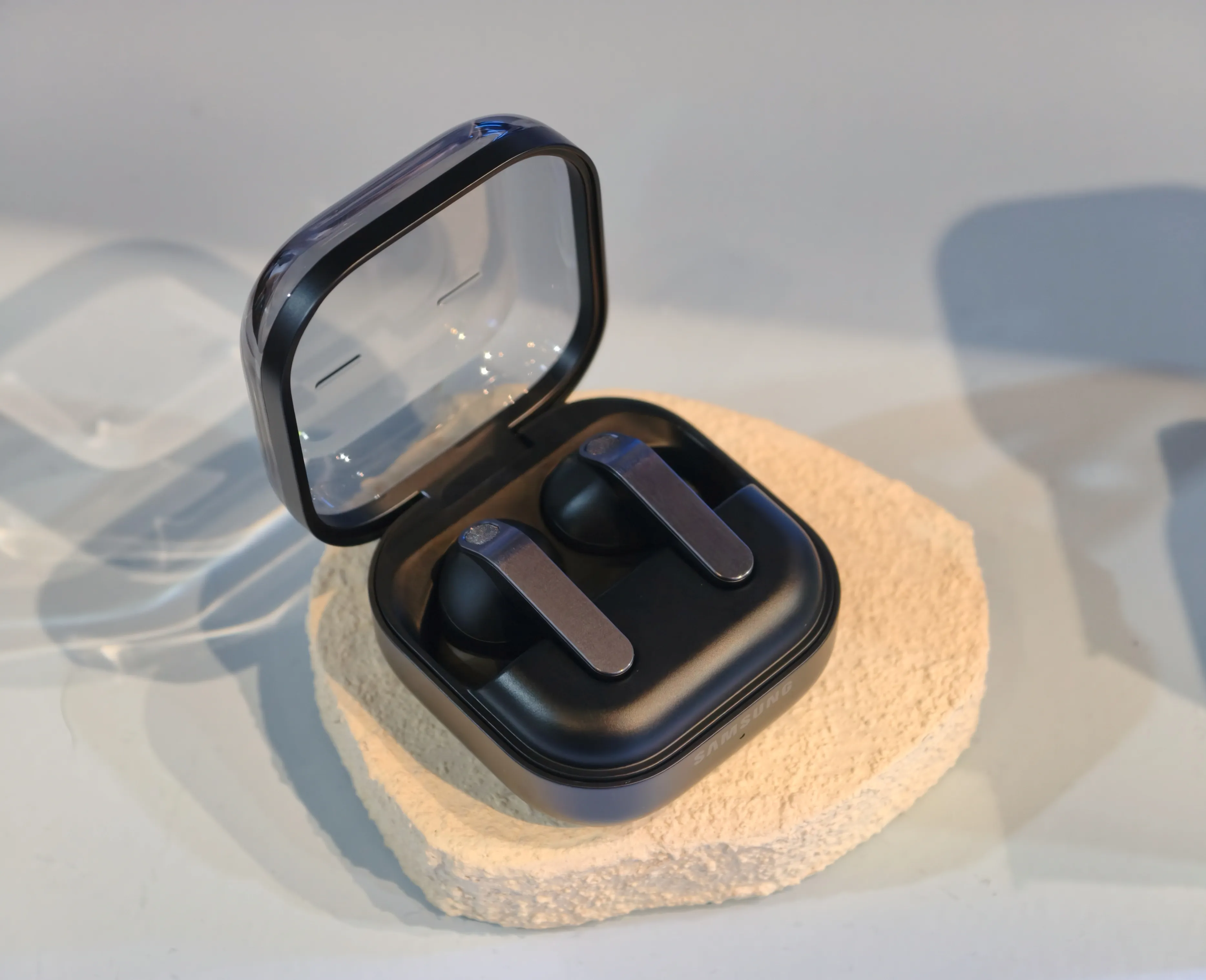
I want to tell you about the moment I put the Galaxy Buds 4 Pro in my ears for the first time, selected "Whole Lotta Love" from a Spotify playlist, and sat with the expression of someone who has just been reminded why they fell in love with music in the first place.
The Buds 4 Pro sound extraordinary. Samsung has introduced a wider woofer — a new design that increases the effective speaker area by nearly 20 per cent compared to the previous generation without increasing the physical footprint of the earbud — and the effect is immediately audible. The UHQ mode on Spotify, enabling 24-bit/96kHz audio, produced a sound profile that was full, detailed, and physically present in a way the Buds 3 Pro never quite achieved. The low end had body rather than approximation. The midrange clarity allowed Jimmy Page's guitar work to occupy actual spatial positions. John Bonham's drumming arrived with the transient impact that makes you understand why people spent serious money on Hi-Fi equipment in the 1970s. The frequency response of 20Hz to 40kHz means both the deep bass pulses and the high resonant overtones that were difficult to reproduce in earlier Buds generations are now rendered with genuine fidelity.
The design has taken a significant step forward. Samsung has based the blade design on hundreds of millions of global ear data points and over 10,000 simulations — and it shows. The canal-fit is more secure than any previous Buds generation I have tested, the premium metal stems carry a visual identity confident enough to stop AirPods comparisons cold, and the earbud heads are smaller, fitting my ears with a precision that made the previous generation feel approximate by comparison. They are lighter than their predecessors, and the transparent clamshell case opens and closes with a satisfying precision that makes the physical interaction feel considered rather than accidental.
The active noise cancellation reached a standard I would place level with the AirPods Pro — which, for anyone who has followed Samsung's audio trajectory through the Buds 3's difficult year, represents a meaningful statement. The 5 to 8 kHz range that the Buds 3 Pro handled poorly has been addressed through the Enhanced Adaptive ANC and Adaptive EQ, which analyses each user's ear shape and wearing conditions in real time and applies optimal ANC algorithms accordingly. The ANC profile feels complete and natural, without the slight high-frequency artefacting that made prolonged use of the previous generation occasionally fatiguing.
The Super Clear Call feature, which uses super wideband technology to double the bandwidth of conventional Bluetooth calls, is the kind of functional addition that earbuds users will notice the moment they take a call in a loud environment. Whether you are at a cricket match or a Delhi traffic junction, the voice clarity at both ends is substantially improved over what conventional Bluetooth call quality typically delivers.
The 360-degree audio mode is pleasant and spatially convincing as a hybrid solution, though it operates as Samsung's own spatial interpretation rather than native Dolby Atmos. For Galaxy smartphone users, the live translation and AI agent integration add genuine utility — Bixby, Gemini, and Perplexity are all accessible hands-free through the Buds 4 Pro, and Head Gestures allow call management and Bixby interaction through a nod or a shake without reaching for the phone. For users arriving from other Android or iOS ecosystems, these features require a Galaxy device to function, which is an ecosystem constraint worth registering.
The case speaker removal is the decision I continue to examine with some perplexity. The manufacturing rationale — a cleaner design, a thinner case, the transparency of the clamshell lid made more architecturally coherent without a speaker grille interrupting it — is comprehensible. The user experience rationale, for anyone who has spent fifteen minutes moving furniture to locate earbuds they knew were in the flat somewhere, is less convincing. Samsung's answer is Find My proximity detection via the companion app rather than audio. It works. It works less well.
The Intelligence Question
The three-agent AI architecture — Bixby as device orchestrator, Gemini as generative intelligence, Perplexity as real-time web intelligence — is the feature that will define the S26 series' reputation over the next twelve months rather than the next twelve days.
The agent orchestration I witnessed in San Francisco is genuinely impressive under the right conditions. The Uber-to-Barcelona task is a compelling proof of concept. The AI Call Screening works. The buried-settings navigation is immediately useful. Now Nudge, which surfaces your Gallery or Calendar when a conversation implies you need them, is the kind of subtle contextual intelligence that makes a phone feel more like a collaborator and less like a tool.
The honest version of these observations acknowledges that multi-agent AI systems have a documented history of performing beautifully in controlled environments and developing interesting new personalities under real-world conditions. Three AI systems trained on different datasets, operating under different privacy models, coordinated by software new to production at global scale — the seams between them become visible under load, under edge cases, under the specific entropy of a Tuesday morning in Delhi when everything needs to work simultaneously.
My full review will test this extensively. What I can say from San Francisco is that the foundation is, for the first time in Samsung's AI ambitions, built on something that feels structurally sound rather than architecturally optimistic.
The Verdict So Far
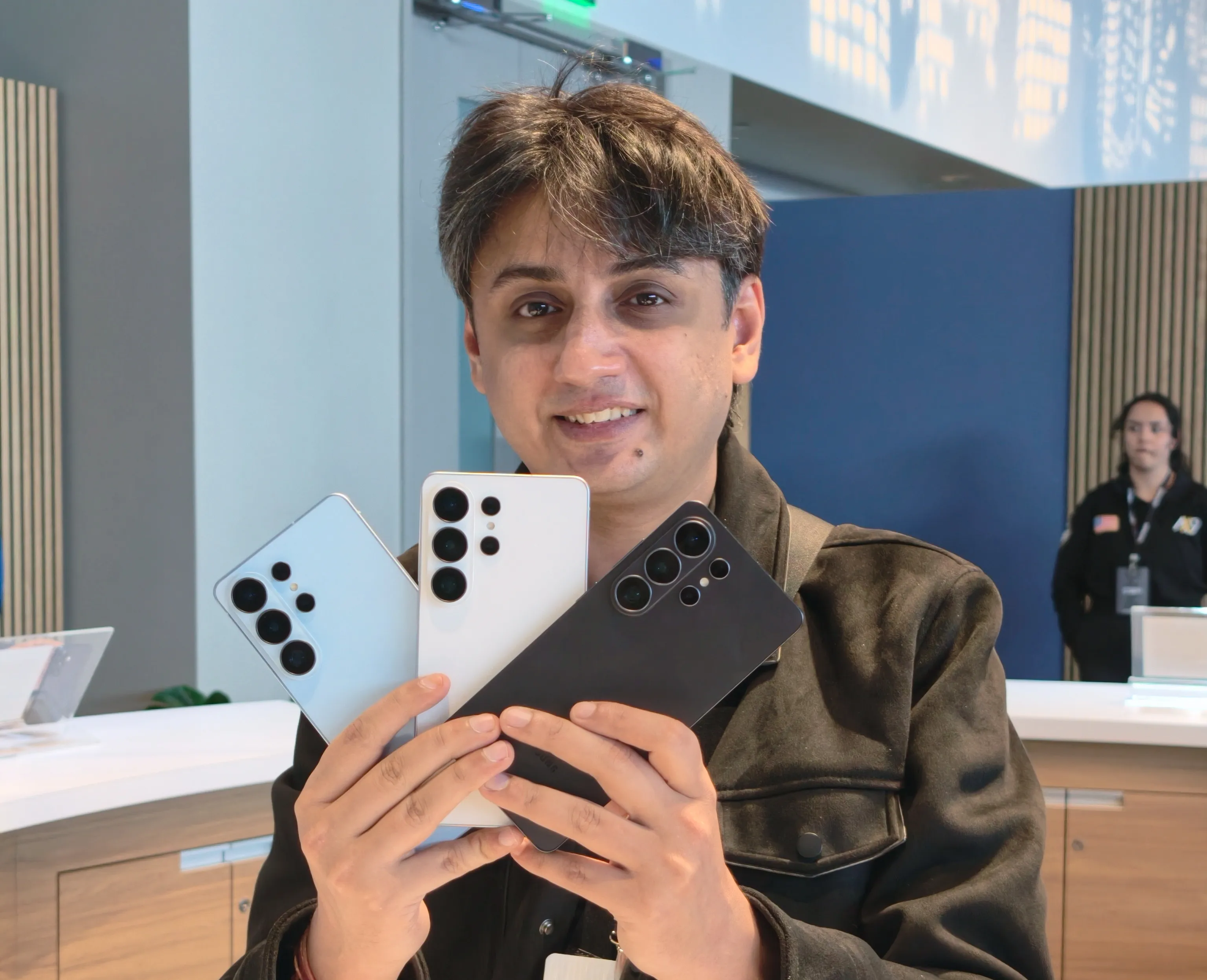
The Galaxy S26 Ultra is the best Samsung has built — refined, purposeful, equipped with a privacy display that genuinely changes the relationship between a phone and its public environment, cameras that have narrowed the competitive gap with meaningful intent, and an AI architecture that, on the evidence of one day in San Francisco, functions with genuine operational elegance. Running Android 16 under One UI 8.5, it also represents Samsung's most coherent software experience to date.
The Exynos 2600 variants that India receives in the S26 and S26+ — the world's first 2nm chip in a mass-market smartphone — ran smoothly, produced competitive performance, and demonstrated GPU potential that pre-launch benchmarks suggest may exceed the Snapdragon 8 Elite Gen 5 For Galaxy in graphics-intensive tasks. The thermal architecture has been rebuilt from the ground up, and the early signs suggest it has been rebuilt adequately. The full answer arrives in March, with a thermal camera and a copy of BGMI at maximum settings.
The Galaxy Buds 4 Pro are, without qualification, the best Samsung earbuds I have heard. The wider woofer, the 24-bit/96kHz audio pipeline, the improved ANC, and the more ergonomic canal-fit represent a generational step rather than a cosmetic refresh. They are competitive with the best earbuds on the market, and Led Zeppelin confirmed this personally.
Rs 1,29,999 for the S26 Ultra positions it at the premium end of the Android ecosystem — the price at which every component needs to justify itself independently. The Flex Magic Pixel privacy display alone is a feature I have genuinely missed on every phone that preceded it. The cameras, the AI orchestration, the video codec support, the thermal redesign, and One UI 8.5 on Android 16 build a case around it that, after a day in San Francisco, feels considerably more convincing than I expected when the lights came up.
Full review to follow. I am going to need more time with BGMI and a longer flight. |





